The private equity space in 2026 looks nothing like it did even a few years ago. Competition has intensified, founders are more selective, and the pace of sourcing opportunities has accelerated dramatically. As firms push to strengthen their deal flow, many are beginning to recognize a shift in power: founders and operators are now evaluating investors just as carefully as investors evaluate them.
This shift has given rise to an essential practice, reverse diligence. It’s the process of understanding how founders judge potential investors and how those perceptions impact access to opportunities. In 2026, reverse diligence has become a strategic necessity for building healthier, stronger, and more consistent private equity deal flow.
Founders Now Decide Who Gets the First Call
In previous cycles, investors often had the upper hand. Today, the best founders have multiple financing options and the ability to choose whom they want to engage with. This change dramatically influences deal flow, because the most promising companies rarely enter widely accessible processes anymore.
- Founders now ask themselves:
- Do I trust this firm?
- Do they respect how I run my business?
- Will they be a supportive partner after the investment?
These questions shape who they reach out to first. This means firms must actively understand how they are perceived and adjust accordingly. Reverse diligence helps investors identify gaps in their own approach, whether it’s communication style, value alignment, or reputation in the market. When these gaps are addressed early, private equity deal flow becomes stronger and more direct.
Reputation Now Travels Faster Than Capital
Reputation has always mattered, but in 2026, it spreads with unusual speed. Founders and operators talk to each other through communities, podcasts, private groups, and referral networks. A single bad experience can quietly lower a firm’s access to quality deal flow without them even realizing why.
This is exactly where reverse diligence plays a critical role. Firms that take the time to understand how they are spoken about within founder networks gain clarity on what needs improvement. Are they known for slow communication? Overly rigid deal terms? A lack of hands-on support? Or are they praised for transparency and collaboration?
When a firm takes these insights seriously, the rewards show up directly in their private equity deal flow. Founders welcome conversations earlier, share more honest information, and connect investors to peers who are also raising capital. A strong reputation becomes an engine that keeps new opportunities coming in.

Why Reverse Diligence Leads to Better Deals, Not Just More Deals
Reverse diligence doesn’t only improve the number of opportunities coming in; it improves the quality.
When investors understand the expectations founders have, they are better positioned to set the right tone from the start. Clarity on involvement, governance, timelines, and expectations helps founders feel respected and understood. This creates smoother conversations and allows both sides to determine whether they are truly aligned.
Aligned partnerships lead to stronger deals. Founders who feel connected to a firm are more willing to share details early, more open during due diligence, and more collaborative long after the investment closes. These factors elevate the strength of private equity deal flow, because good founders talk, and they refer investors they trust.
The Transition from Strict Transactions to Long-Term Partnerships
Across industries, founders now prefer investors who contribute beyond capital. Such partners should know about the difficulties they face, give information, and be solid advisors through difficult times. This is a new approach for investors because they are switching from a more transactional way of conducting business to a more partnership-oriented way of doing things.
Reversing diligence can help investors figure out whether their behaviors correspond to what the founders want from good partners. While some founders like to engage in frequent communication, others prefer less frequent communication.
This trust feeds directly into deal flow. When a founder feels supported, their networks open up. They become advocates. And in an increasingly crowded private equity environment, earning that advocacy is one of the strongest advantages a firm can have for sustainable private equity deal flow.
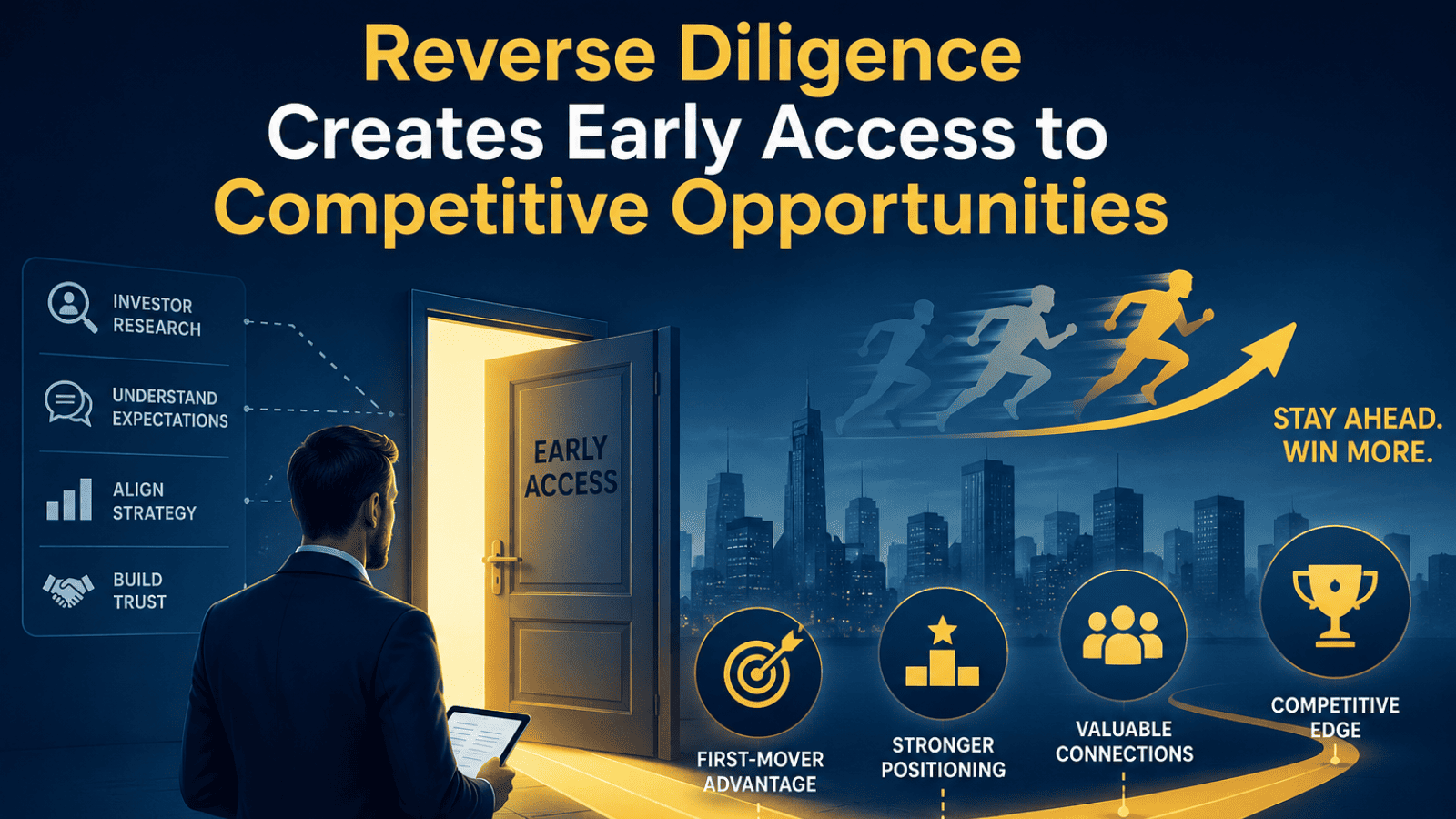
Reverse Diligence Creates Early Access to Competitive Opportunities
One of the biggest advantages of reverse diligence is gaining access to opportunities long before they become public.
Where investors demonstrate sincere desire to understand the entrepreneur beyond numbers, stronger relationships are built. These relationships allow companies to get insight on future raise rounds and changes in strategy. Rather than being involved in bid wars, they are called upon first for one-on-one discussions.
This early access is invaluable. It gives them the chance to create connections, gain insight into the business, and tailor proposals accordingly to suit their vision. Such deals rarely make it through conventional routes for investments, thus giving them a clear competitive advantage over other firms.
Transparency Is Becoming a Standard Expectation
Another important factor that will influence private equity deals in 2026 is the need for transparency. Founders are keen to know everything: whether it is about deadlines, or post-deal expectations, anything that is not transparent will hinder the process.
Reverse diligence encourages investors to examine their communication patterns. Are they clear about their expectations? Do they provide timelines they actually follow? Are they upfront about their investment criteria?
Improving transparency leads to smoother conversations, fewer misunderstandings, and faster movement, all crucial for stronger deal flow.
Conclusion
In order to become successful in 2026, private equity firms need to realize how important it is to be assessed just like you assess other people. “Reverse due diligence” is not an emerging trend but a necessary shift of strategy to fit the new reality.
By understanding how founders think, communicate, and choose partners, firms can strengthen their reputation, build trust, and create a healthier pipeline of opportunities. In an environment defined by competition and speed, this approach is essential for maintaining predictable, high-quality private equity deal flow and long-term success.

I’m the Co-Founder of Startup Steroid, where I help founders navigate the challenges of building a startup. From connecting with the right investors and talent to guiding marketing, legal, and MVP development, I work alongside entrepreneurs to provide practical support and clarity, helping them grow their ideas into successful, sustainable businesses.