Angel investing is widely seen as an early spark that helps founders take their ideas to market. But when you look closely at how successful angel-backed startups grow, another pattern becomes obvious: the real impact of an investor begins after the money is transferred. The strategic side of angel investing lies in what happens next; how investors stay involved, how they monitor progress, and how their continued guidance influences the company’s course.
This ongoing involvement, often called post-investment monitoring, is no longer optional. Today’s fast-paced markets demand continuous awareness, strong collaboration, and quick decision-making. As a result, portfolio monitoring angel investors carry out has become one of the most important predictors of startup performance.
This blog explores what continuous monitoring really means, why it has become such a crucial part of angel investing, and how investors can build systems that support founders without overwhelming them. Throughout the discussion, we’ll also highlight how meaningful post investment support in angel investing strengthens both startup resilience and long-term outcomes.
Understanding Continuous Portfolio Monitoring
The essence of portfolio management lies in maintaining constant supervision over a startup’s operations, performance, and difficulties after the funding stage. Rather than remaining passive, venture capitalists develop an active yet courteous interest in the development of the company.
This entails being abreast of all financial advances, knowing what goes on in product development, noting major milestones, and evaluating the real-life situation of operations. The idea here is not to undermine the leadership role of the entrepreneur but to be close enough to mentor, advise, and where necessary, intervene.
Early-stage companies operate in environments where things change quickly. Projections made during the pitch don’t always hold up against real-world shifts. That’s why post-investment monitoring acts as a corrective lens, it helps investors stay aligned with what’s happening, not what was expected to happen.
Investors who practice strong monitoring are better equipped to advise founders, anticipate risks, and help solve problems before they escalate. This is one reason effective post investment support in angel investing has become a core expectation in the startup ecosystem.
Why Monitoring Is Becoming Increasingly Important
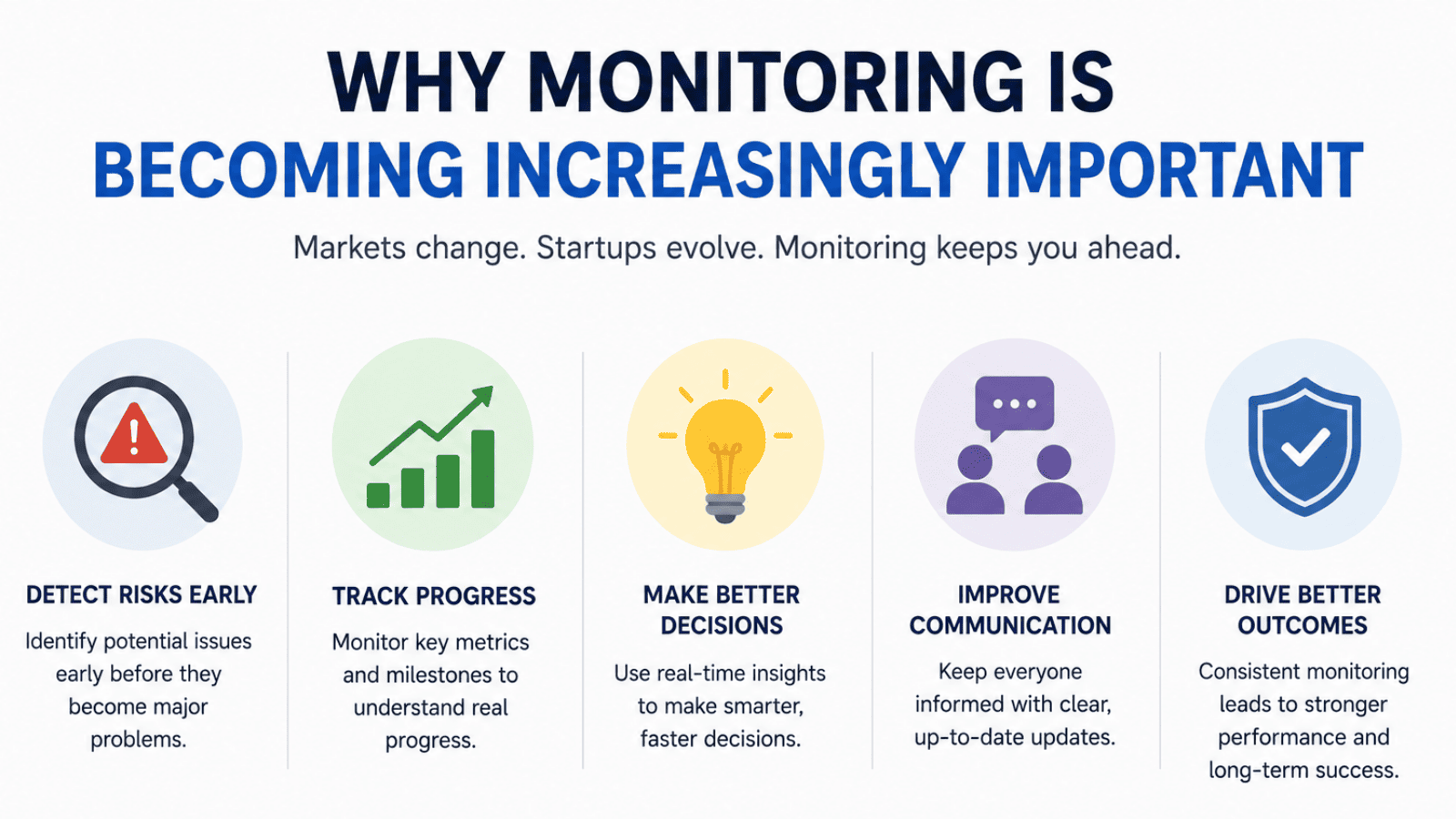
The startup world has changed dramatically. Markets shift faster, competition is global, and most founders face challenges they have never encountered before. These circumstances make continuous monitoring essential for both investors and startups.
The importance of monitoring lies in the degree of uncertainty surrounding the venture at the beginning. There are many potential problems that will not surface until there are implications for revenue, the company’s performance, or its products. Investors who conduct regular post-investment monitoring will be able to spot early warnings and act on them in time.
Another critical reason is the need for informed decision-making around follow-on investments. Angels frequently participate in multiple funding rounds. In the absence of proper visibility, there is a chance that the company could take a decision based on assumptions rather than facts. Constant insight will assist them in determining whether or not the companies should be supported further.
Monitoring also strengthens the relationship between founders and investors. Founders often work in high-pressure environments. When the investor knows that he cares for them apart from their performance, there is a sense of trust. Trust leads to honesty in sharing problems. The investor will find it easier to provide them with direction, an important component of nurturing startups by angels.
Finally, consistent monitoring improves the overall outcome of the portfolio. When investors have a real-time understanding of each company, they can help prioritize actions, optimize strategies, and open doors to new opportunities. This makes the entire portfolio healthier and more balanced.
The Role of Post-Investment Support
While money gives startups the initial push, it is post investment support in angel investing that shapes their journey afterward. Support isn’t defined by the number of hours an investor spends with a founder, it’s measured by the relevance and timeliness of their involvement.
Support often begins with regular conversations. These check-ins allow founders to share progress, upcoming plans, and issues they’re facing. Many investors conduct these meetings monthly or quarterly. Through these discussions, the investor builds an updated view of the company’s direction and identifies areas where help may be required.
Financial understanding is another important part of support. Many early-stage founders are product-focused, and financial tracking can feel overwhelming. Investors step in by reviewing reports, helping interpret trends, and guiding founders on topics such as burn rate, runway, and unit economics. This financial clarity is foundational to strong portfolio monitoring angel investors carry out on an ongoing basis.
Support also includes operational insight. Startups often struggle with hiring, team structure, workflow design, or product prioritization. When investors understand these challenges, they can provide input based on their own experience or connect founders to people who can help.
One of the major benefits that angels bring along is the connection they have through their extensive network. Introduction to their business partners, consultants, leaders in the industry, and even their clients can make a lot of difference in helping startups grow at an accelerated pace.
Fundraising assistance is another form of support. Angels sometimes help founders prepare for later financing rounds, enhance their pitch decks, and introduce them to the right people. Angels’ reputation also helps ease negotiations with these parties.
Combined, these efforts create a system where founders feel equipped, supported, and confident. And that is the true purpose of ongoing post-investment monitoring.
Why Startups Need More Than Capital to Scale
Capital provides the resources to get started, but scaling requires far more than money. Early-stage businesses face a long list of uncertainties, and many founders—especially first-time founders, lack experience in managing them.
The first challenge is the unpredictability of the market. Changes can result from the customer’s demand, competition strategy, and regulation. In order for a startup company to adapt quickly, investors can provide an outside perspective in order to analyze what changes are taking place. If the investors stay informed continuously, then they will make good consultants.
Founders also face pressure in operational areas such as hiring, team management, and product execution. Such tasks may prove daunting to individuals who have not yet built or led a team. Post-investment assistance in angel investing is essential in helping entrepreneurs recognize what needs to be done and how to do it without making any mistakes.
Scaling also involves accountability. Many entrepreneurs receive help from an outside observer who continuously assesses their progress and encourages them to give truthful information.
Another important factor which makes it necessary for startups to receive help is investor reputation. It becomes easy for the startup to build its reputation among other potential investors when an angel is still involved and well-informed. Continuous monitoring helps create that positive perception.
All these aspects explain why startup growth support from angel investors goes far beyond giving advice, it becomes a framework that supports long-term growth.
Building an Effective Monitoring System
Monitoring should feel helpful, not intrusive. The most successful investors create a system that keeps them informed while leaving founders free to lead.
A good monitoring system starts with clear expectations. The investors and entrepreneurs need to begin by identifying at what frequency they will communicate, the means of communication they prefer, and the KPIs that must be in place right from day one. This makes everything clear right from the beginning.
Secondly, it is essential for investors to determine which KPIs are most important. This will differ depending on the company, as not all startups require the same KPIs to be measured. What matters is that the selected metrics capture the company’s real progress.
Investors should also encourage simple, consistent reporting. A short summary report that contains the highlights, difficulties, measurements, and future goals will be clearer than any detailed presentation. A brief update alone will be sufficient to remain visible.
Regular conversations are another essential element. These meetings don’t always have to follow a strict agenda. Sometimes, the greatest value that comes out of this discussion can be gaining insight into the emotions of the founder toward their company, and the stressors they face.
Technology can also support the monitoring process. Many investors use dashboards or reporting tools to track financial metrics and performance indicators. These tools make portfolio monitoring angel investors perform more organized and data-driven.
Finally, it’s important for investors to maintain a supportive mindset. Monitoring should not feel like surveillance. Rather, it must be collaborative. This means giving guidance, informing, and allowing the entrepreneur to be aware of problems that may emerge in advance.
How Monitoring Improves Startup Outcomes
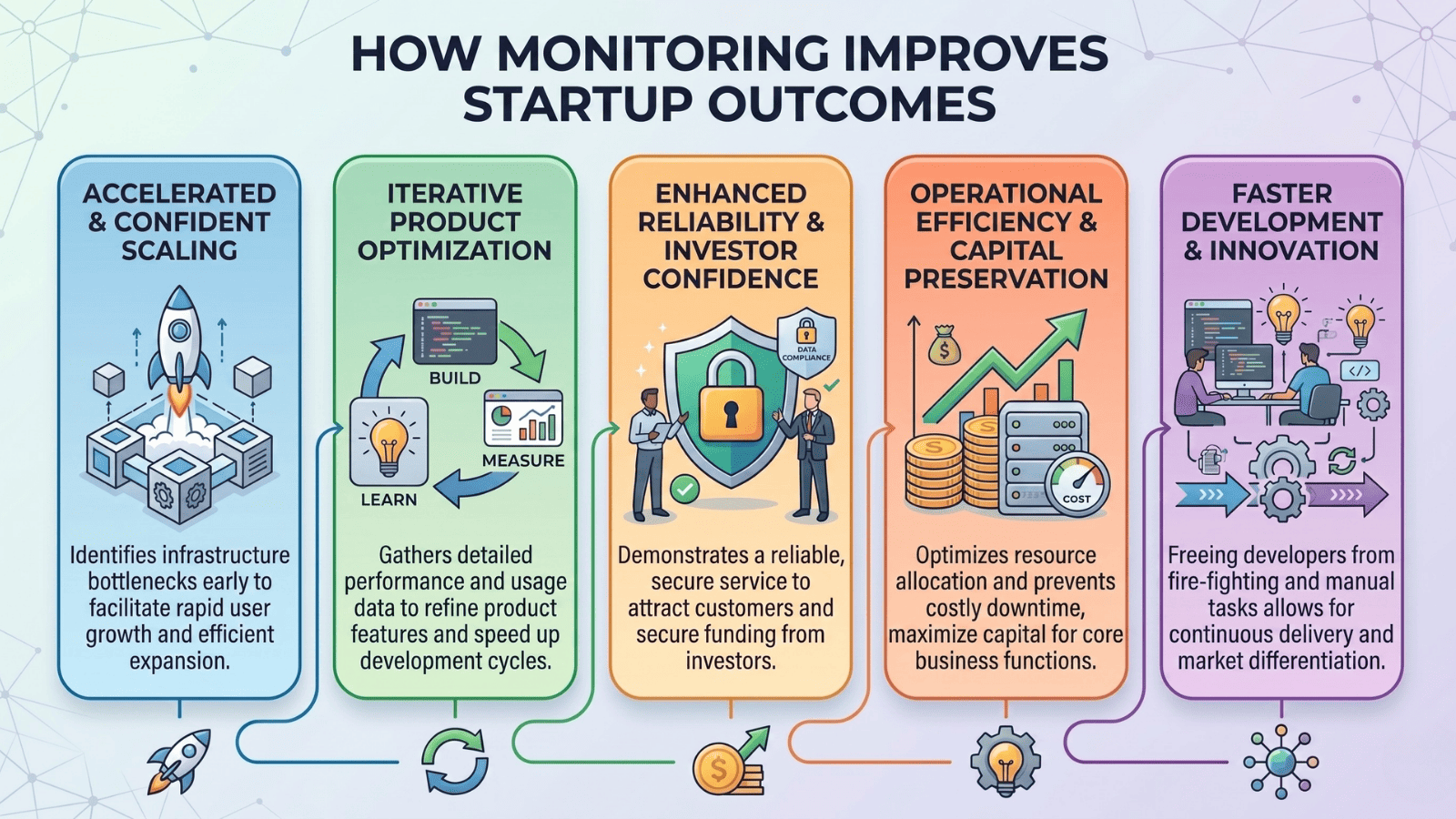
The good effect that monitoring can have is shown through its effects on implementation and strategy.
Startups gain from quicker identification of problems arising. When the revenues fall or there is a delay in product development or customer losses start increasing, then these things can be quickly sorted out if investors are able to monitor everything constantly. Such big disasters usually start off as very little problems.
Monitoring also improves strategic decision-making. Founders face multiple trade-offs in their journey; whether to pivot, scale, adjust pricing, or enter a new market. Having an experienced investor aware of the company’s context provides better support during these decisions.
Continuous monitoring also strengthens the founder’s confidence. Knowing that they have someone to consult reduces the emotional weight of leadership. This emotional stability helps founders focus better and make sharper decisions.
Another key result is improved fundraising potential. Entrepreneurs who practice disciplined reporting and communication become more attractive to future funding sources. Effective reporting implies efficiency, openness, and preparation for expansion. Consequently, post-funding surveillance becomes a gateway to successful fundraising cycles.
In essence, monitoring plays a role in ensuring that there is better portfolio management. The fact that investors know the level of success enjoyed by each company helps them to allocate funds in an intelligent manner.
The Founder’s Perspective on Monitoring
To truly appreciate the value of monitoring, it helps to understand what founders expect from investors after funding. Most founders do not want constant supervision, but they value consistency, clarity, and timely guidance.
They appreciate investors who take interest in understanding their business and who make themselves available when challenges arise. They are more likely to reach out when they feel they won’t be judged for facing difficulties. This level of trust is a direct benefit of strong post investment support in angel investing.
Founders also want investors who respect their autonomy. Help can be useful, yet interference may hamper development and cause confusion among team members. The smart investor is aware of when to interfere and when not to.
Good relations are based on open communications. When entrepreneurs can openly discuss their achievements as well as failures, the monitoring function of the investor becomes more meaningful. This is the principle that underlies angel investors’ support for startups.
How Monitoring Strengthens the Angel Investment Ecosystem
Continuous monitoring doesn’t only benefit individual startups. This helps improve the angel investing environment. Investors that monitor their portfolio’s performance regularly end up making better investments and developing greater knowledge about the trends prevailing in the market.
The result is that investors’ interactions with founders become more positive, which attracts more founders to raise angel funding. As founders’ success stories are shared, angel investors develop a good reputation.
Besides, the next group of investors, like venture capitalists, feel more comfortable if angels have good reporting systems. It makes the shift from one stage to another easier for startups and helps improve their development process.
In this way, portfolio monitoring angel investors undertake becomes a pillar that supports both individual companies and the wider ecosystem.
Conclusion
Angel investors do not just make one-time investments. They interact in a manner that has effective communication and clear objectives. This is ensured by continuous monitoring, which not only ensures that both parties are kept up to date but also addresses any arising problems. It improves wise decision-making and scalability.
Uncertainty is always present in our universe, and the post-investment assistance by the angel investor, the startup growth assistance by the angel investor, the effective portfolio monitoring carried out by angel investors, and the consistent post-investment monitoring become the key to success in angel investments. The startup gets not only financial assistance but also the company that shares the whole journey. For the angel investor, this is when strategy, expertise, and value are created.
FAQs
- How does post-investment monitoring shape a founder’s decision-making style?
Post-investment monitoring gives founders clearer data, timely feedback, and outside perspective. This will enable them to make decisions through enlightenment rather than force. In situations where monitoring of angel investor portfolios is regular, entrepreneurs will feel confident when making risk assessments, task prioritization, and strategic decision-making.
- Why do some angel-backed startups outperform others even with similar funding levels?
The difference often lies in the quality of post investment support in angel investing. Startups that receive strategic guidance, introductions, and access to investor networks often progress faster than those that only receive capital. Support becomes a multiplier for growth.
- What role does investor–founder trust play in effective post-investment monitoring?
Trust determines how openly founders share challenges. Where trust exists, post-investment monitoring will be more effective since the investor acquires true insight into the goings-on within the enterprise. This results in enhanced cooperation and sounder recommendations being made.
- Does continuous monitoring slow down a startup by adding extra reporting work?
Not when done correctly. Good investors design simple, clear reporting formats. In practice, streamlined portfolio monitoring angel investors follow actually saves founders time because they get guidance earlier and avoid costly mistakes caused by unseen problems.
- How does startup growth support from angel investors impact later fundraising rounds?
Angel investment providing significant backing of startup growth increases confidence in investors for future rounds of investments. New investors see organized reporting, strategic decision making, and mentoring in the startup, and therefore consider it less risky and more ready for growth.
- What kinds of signals should angel investors look for during post-investment monitoring?
Indicators can include alterations in consumer behavior, delays in product release, altered team dynamics, and discrepancies in financial figures. These signals assist investors in determining whether the venture is headed for success or suffering problems.
- How much involvement is “too much” when offering post investment support in angel investing?
Too much involvement happens when investors override founders, slow decisions, or impose unnecessary processes. Effective post investment support in angel investing maintains a balance, guiding without controlling and stepping in only when support adds real value.
- Why is emotional support becoming a recognized part of startup growth support from angel investors?
The founders of startups are prone to experience feelings of loneliness, anxiety, and confusion. The founders will find it easier to make decisions if they get some level of assurance from the investors alongside advice.

I’m the Co-Founder of Startup Steroid, where I help founders navigate the challenges of building a startup. From connecting with the right investors and talent to guiding marketing, legal, and MVP development, I work alongside entrepreneurs to provide practical support and clarity, helping them grow their ideas into successful, sustainable businesses.