In the world of startup investments, the concept of deal flow venture capital is arguably the most significant term for investors and entrepreneurs alike. In simple terms, the concept of deal flow defines the quality and quantity of investment opportunities that are made available to venture capital firms.
Understanding how to manage and optimize the venture capital deal flow process can make the difference between a firm that consistently backs high‑growth companies and one that misses out on industry‑defining opportunities.
In this blog, we will seek to understand what deal flow is, why it is important, and, perhaps most importantly, how firms can improve their venture capital deal flow.
What Is Deal Flow in Venture Capital?
Definition of Deal Flow
Deal flow refers to the flow of investment opportunities that a venture capital firm considers. It involves pitches from startups, referrals from founders, introductions from accelerators, and direct approaches by founders or other investors.
In the context of deal flow venture capital, it refers to the lifeblood of a firm’s ability to invest in or source startups that have potential.
Components of Deal Flow
Not all opportunities in deal flow are equal. A strong deal flow pipeline may include early‑stage startups, later‑stage ventures, and even co‑investment opportunities with other venture firms.
The quality of this flow affects a firm’s ability to select winning investments.
Deal Flow vs. Deal Quality
A high volume of opportunities is less important than high‑quality opportunities. The best venture capital firms focus on creating a consistent stream of promising prospects, not just many prospects.
Why Deal Flow Matters in Venture Capital
Foundation of Investment Success
Without a solid deal flow venture capital, a firm cannot find the best startups to back. Even the most expert investment teams need a well‑populated pipeline to choose from.
Early‑stage investors, in particular, depend on strong pipelines to spot disruptive ideas before competitors.
Competitive Advantage
In a crowded investment landscape, top performers win because they see opportunities others don’t. A refined venture capital deal flow process gives firms a strategic edge.
It lets them build relationships early, secure favorable investment terms, and participate in rounds that shape emerging industries.
Risk Management
Investment risk can be better managed with a robust deal flow system. If a firm has access to a large number of attractive opportunities, it can be selective and ensure a balanced portfolio by investing in start-ups that are in different industries, stages, and models.
The diversification will assist in reducing the risks that are associated with investing in early-stage start-ups.
How Venture Capital Firms Generate Deal Flow
Networking and Relationships
One of the most reliable sources of deal flow is personal and professional relationships.
Founders, other venture capitalists, angel investors, advisors, and alumni networks all feed into a firm’s deal flow.
Staying engaged in the ecosystem through events, conferences, and relationships is a good way to keep a steady pipeline.
Accelerators and Incubators
Working with accelerators and incubators is a proven way to access early‑stage startups.
Programs like Y Combinator, Techstars, and local accelerators can serve to channel high-potential entrepreneurs into the portfolios of connected venture investors.
This contributes directly to deal flow venture capital that can lead to early investments.
Inbound Applications
Many firms maintain open submission portals or application forms for founders seeking funding.
Inbound deal flow from founders who have researched the firm’s focus and value proposition tends to be more relevant than random cold outreach.
The Venture Capital Deal Flow Process Explained
1. Sourcing Opportunities
The first stage in the venture capital deal flow process is called sourcing. Venture capital investors need to cast a wide net in order to look at a broad scope of opportunities.
This includes outbound efforts, inbound applications, and network-driven efforts.
2. Initial Screening
After an opportunity has been sourced, the venture capital firm conducts an initial screening. This is where they conduct a general assessment of the startup team, market, product, and traction.
The goal in this step is efficiency; getting rid of those deals that obviously do not fit the firm’s investment thesis and accelerating those that do.
3. Due Diligence
This due diligence is an in-depth look at the startup’s business model, financial situation, product development roadmap, customer base, and competitive environment.
The thorough due diligence process sets apart the promising ventures from the rest, helping the firm prepare to negotiate terms.
4. Investment Committee Review
Most venture capital firms use an investment committee to make final decisions. The committee considers the results of due diligence in relation to its portfolio strategy and risk profile.
If the startup passes, the next phase is term sheet negotiation.
5. Term Sheet and Closing
This phase seals the terms of the deal. It still falls in the venture capital deal flow process, as here the terms are determined.
Once the term sheet is signed and legal diligence is complete, the investment deal closes.
6. Post‑Investment Engagement
Although this is not necessarily always part of the deal flow conversation, post-investment engagement is actually part of the feedback loop.
Successful outcomes lead to network referrals, future co‑investments, and stronger brand recognition, which boosts future deal flow.
Challenges in the Venture Capital Deal Flow Process
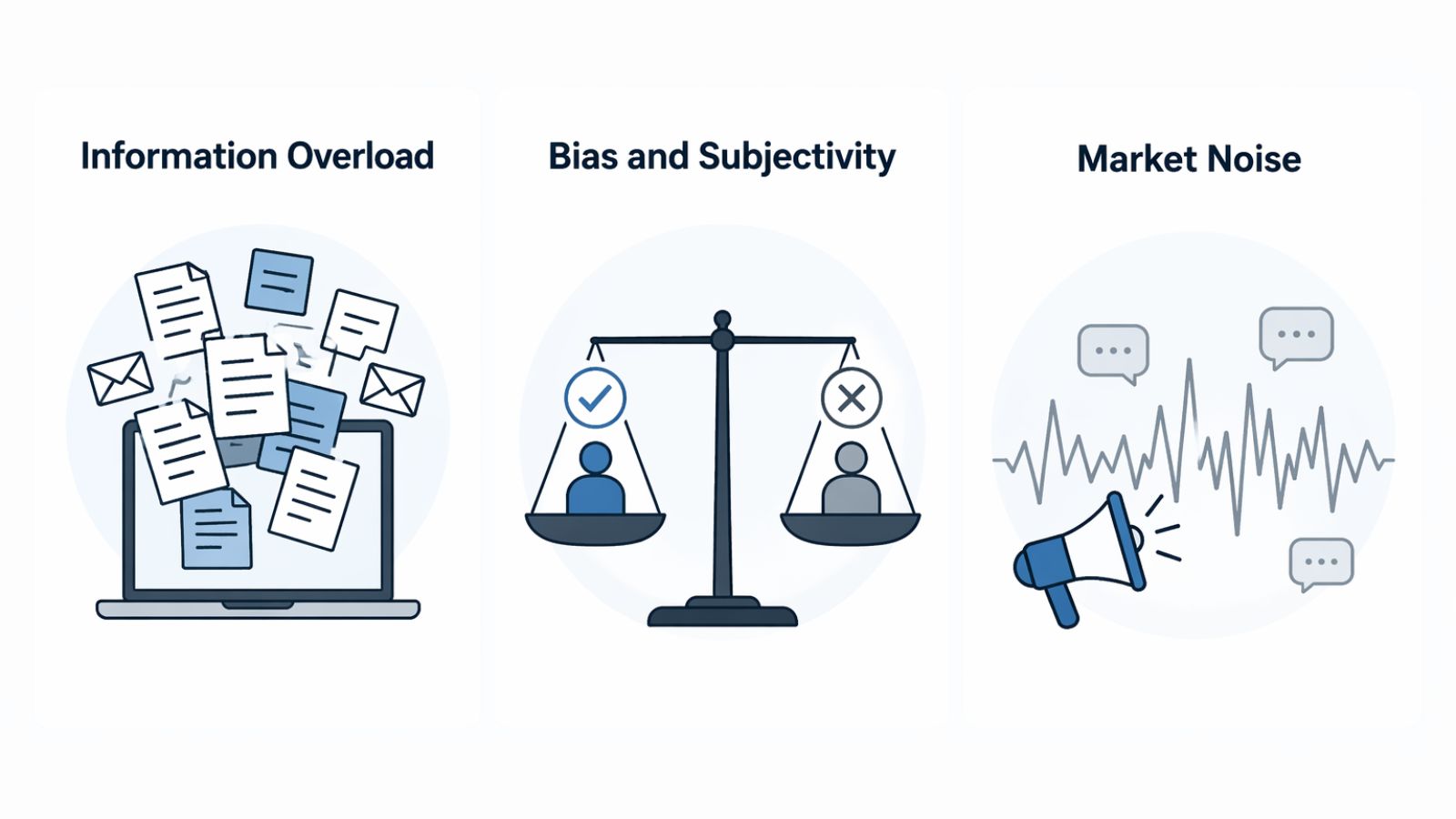
Information Overload
It can be overwhelming to evaluate all opportunities with fairness. Firms have to build filtering mechanisms to concentrate on opportunities that meet the strategic requirements.
Bias and Subjectivity
Unconscious biases can influence screening and decision‑making. Venture capital leaders are becoming more aware of the effect of bias on the evaluation of deal flow.
Market Noise
It is also important to note that sometimes trends and hype can confuse investors. It is quite easy to get caught up in something that is being widely discussed, but good investors know better.
An optimized venture capital deal flow process helps distinguish substance from buzz.
Strategies for Improving Deal Flow Venture Capital
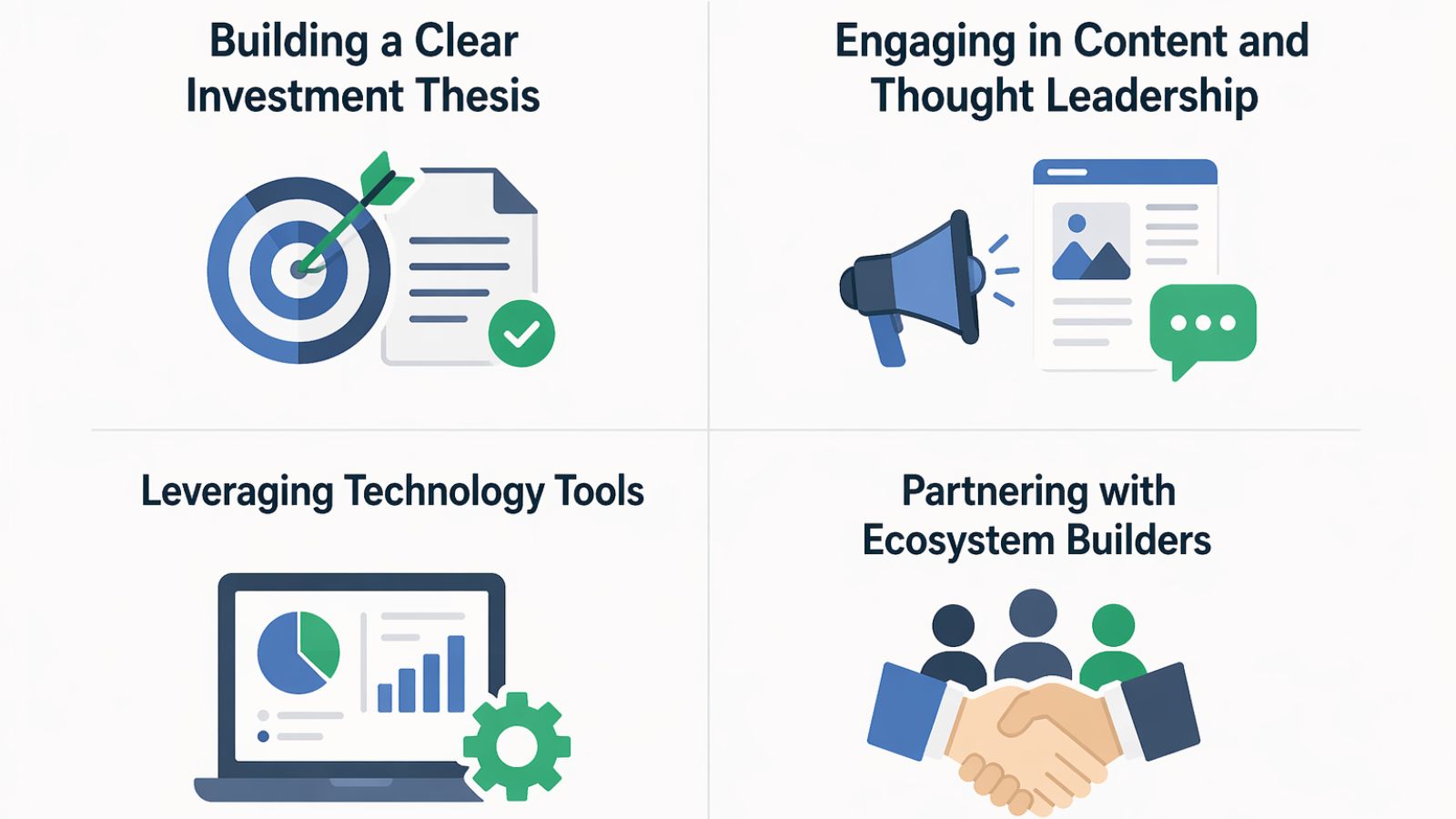
Building a Clear Investment Thesis
An investment thesis that is well-defined will include the themes, industries, stages, and geographies that the firm is most interested in investing in.
This clarity not only speeds the evaluation process but also helps founders self‑select when approaching the firm.
It helps ensure that deal flow is well-aligned with strategic priorities.
Engaging in Content and Thought Leadership
Creating articles and making oneself visible online helps a firm increase its visibility among founders.
Thoughtful content positions a firm as a knowledgeable and approachable partner, encouraging higher‑quality inbound deal flow.
A consistent, value‑driven content strategy directly improves the quality of deal flow venture capital.
Leveraging Technology Tools
There are emerging tools that help track, categorize, and nurture leads. Using a structured CRM system to manage interactions allows firms to monitor where each opportunity sits in the venture capital deal flow process.
Reminders, tagging, and scoring help investors keep pipelines organized.
Partnering with Ecosystem Builders
Partnerships with accelerators, universities, research centers, and industry organizations can also provide the firm with opportunities to expand its footprint.
These groups sometimes launch innovations before they gain public attention, which helps the firm improve the quality of its deal flow.
Measuring the Effectiveness of Deal Flow
Volume vs. Quality Metrics
A key measure of a strong pipeline is how many opportunities move from initial contact to final investment stage.
But volume isn’t enough. Firms also have to track the number of deals that are successfully screened and have high return outcomes.
Conversion Rates
Conversion from Sourcing to Screening to Due Diligence to Investment can provide insight into where the venture capital deal flow process is working or not working.
If there are too many deals in one stage, it can be optimized.
Source Attribution
Knowledge of the best channels for sourcing the best startups can help improve the sourcing of startups in the future. For instance, referral sources of trusted advisors may have a higher ROI than online sources.
In addition, knowing the source of the deals can help refine the sourcing strategy.
How to Optimize Each Stage of the Venture Capital Deal Flow Process
Optimizing Sourcing
Regularly review which channels produce high‑potential leads. Invest more time in top‑performing networks and reduce effort on low‑yield sources.
Firms should also explore fresh sources, industry meetups, hackathons, specialized creator programs, to expand diversity and innovation in their pipelines.
Improving Screening
Establish clear criteria for moving startups through the screening stage. Scorecards can be used with key metrics like team experience, product fit, traction, and market potential.
This minimizes subjectivity and hastens decision-making.
Enhancing Due Diligence
The due diligence phase may also be a costly phase, but one may be able to make the most out of it by making use of checklists, experts, and data tools to verify the information obtained. Standardization in this phase can be beneficial.
Smoother Committee Approval
One may be able to hold the investment committee meetings in a cost-effective manner by making use of the information in advance. This saves time and ensures thoughtful debate.
Streamlining Legal and Closing Phases
Delays in legal review and closing stages can be addressed by creating standard templates and building legal partnerships.
Thus, it ensures that the final stages of the venture capital deal flow process are not bottlenecks.
Future of Deal Flow Venture Capital
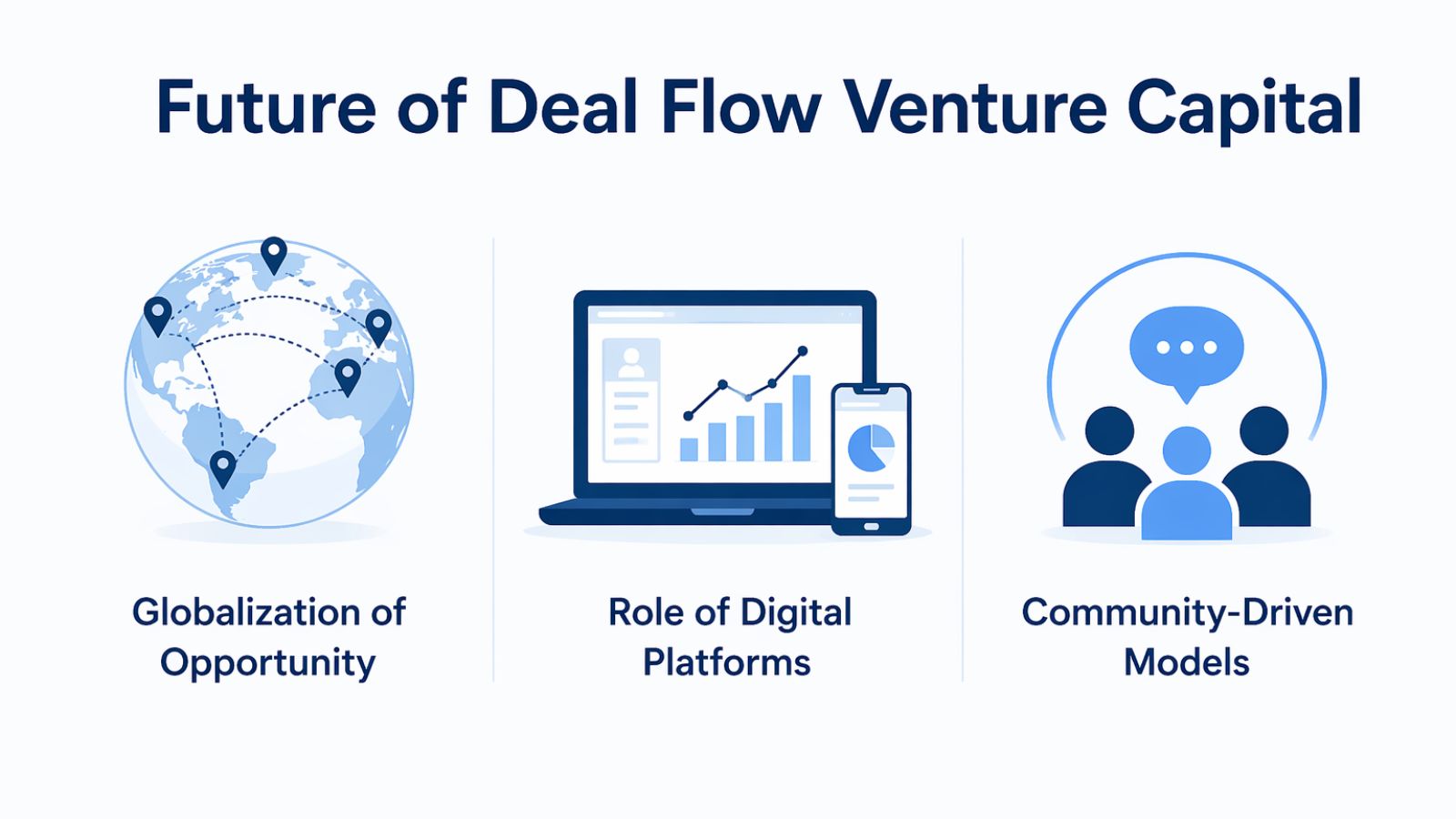
Globalization of Opportunity
No longer is deal flow localized in Silicon Valley or traditional tech hubs. By actively seeking deal flow outside of traditional markets, organizations gain access to unique innovations and diverse founders.
Role of Digital Platforms
Digital platforms that bring venture capitalists and founders together on a large scale will continue to be a factor in venture capital deal flow.
Community‑Driven Models
Startup communities, founder networks, and collaborative investor platforms will continue to be a force in the way they enable the sharing of opportunities and collaborative investment structures.
These trends further emphasize the importance of having a good and effective deal flow strategy in place.
Conclusion
Therefore, knowing the concept of deal flow venture capital and the process of the venture capital deal flow process is vital for any venture capitalist who wants to be successful in this field, as it is a competitive field.
It is not merely about the volume of deals; it is about obtaining the right volume of deals, handling them effectively, and investing in the best innovators.
The venture capital firms can also enhance the way they source, screen, evaluate, and secure opportunities through better deal flow.
At its heart, a well‑designed deal flow system reflects a firm’s clarity of purpose, strategic priorities, and commitment to excellence.
Venture capital investors can always find and fund the next generation of industry-leading companies through the development of the right processes.
FAQs
- How does a firm’s investment thesis influence the quality of its deal flow venture capital pipeline?
A well-defined investment thesis acts as a filter to help entrepreneurs understand if they are a good fit before reaching out to the VC. It eliminates unimportant pitches and enhances the quality of the overall deal flow for the VC investment pipeline.
- What role does founder reputation play in the venture capital deal flow process?
The founder’s reputation can sometimes impact the speed of the deal moving through the venture capital deal flow process. Venture capital firms might favor reviewing deals from founders who have a track record or have been recommended by partners in their network, which often signals more reliability and execution ability.
- How can venture capital firms reduce bias during the initial screening phase?
Bias can be reduced by using structured scorecards, predefined evaluation criteria, and multi-reviewer assessments. These practices keep the deal flow venture capital funnel fair and consistent, preventing subjective judgments from influencing which startups receive attention.
- Why do some sourcing channels consistently outperform others in the venture capital deal flow process?
Some channels, such as referrals from past founders or accelerators, perform better because these channels have already vetted the startups before presenting them to investors. Companies that can measure channel performance can optimize their venture capital deal flow.
- How does post-investment engagement affect future deal flow venture capital opportunities?
Strong post-investment relationships often lead to founder referrals, co-investment chances, and organic introductions from successful portfolio founders. This creates a loop where satisfied founders naturally contribute to healthier deal flow venture capital over time.
- What are early warning signs that the venture capital deal flow process needs optimization?
These can include long delays during the screening process, unclear movement through the stages, bottlenecks during the due diligence process, or the percentage of high-quality deals reaching the committee. These are indicative of inefficiencies in the venture capital deal flow process, which necessitate change.
- How can firms ensure they are not solely dependent on one source of deal flow venture capital?
Diversification is key. Firms should balance referrals, inbound applications, partnerships with ecosystem builders, and proactive outbound sourcing. A diversified deal flow venture capital approach reduces risk and prevents reliance on any single channel.
- How does globalization impact the venture capital deal flow process?
Global accessibility to startups allows firms to evaluate opportunities beyond traditional tech hubs. This broadens the venture capital deal flow process, introduces new industry categories, and adds geographic diversity, resulting in a richer, more innovative pool of potential deals.

I’m the Co-Founder of Startup Steroid, where I help founders navigate the challenges of building a startup. From connecting with the right investors and talent to guiding marketing, legal, and MVP development, I work alongside entrepreneurs to provide practical support and clarity, helping them grow their ideas into successful, sustainable businesses.