As soon as you invest, a new path starts, one which demands constant vigilance and well-thought-out decision-making. While many investors emphasize deal-sourcing and analysis, sustained success lies equally in post-investment activities. Here, the significance of risk management becomes apparent and demands the attention of all investors.
With the ever-changing nature of the markets and the continuous development of businesses, investors need reliable methods for gauging their success and recognizing any potential risks. It is for this reason that many organizations opt for a systematic approach backed up by reliable portfolio performance tracking systems. These tools and strategies work together to improve portfolio visibility for investors, giving them the clarity they need to guide companies and protect their capital.
Why Post-Investment Risk Monitoring Strategies Matter
Every investment carries potential, but that potential only becomes reality with consistent oversight. Strong post-investment risk monitoring strategies help investors understand whether a company is meeting its goals or drifting off track.
If no effective monitoring framework is put into place, risks might easily be overlooked until it becomes too late to reverse the situation. Small changes that occur within the business in terms of performance and value may eventually add up and have a greater impact on the business.
These strategies also allow investors to stay aligned with founders. They set clear expectations for reporting, follow-up, and communication. When this structure is in place, investors gain more transparency and significantly improve portfolio visibility for investors. Founders benefit too; they receive actionable feedback and support rather than last-minute pressure.
In addition, strong monitoring reduces uncertainty. The investor feels much better about his investments once he has access to the activities inside the company that makes up his portfolio. He gains greater insight from having the assistance of tools used for portfolio performance monitoring.
How Portfolio Performance Monitoring Tools Support Better Visibility
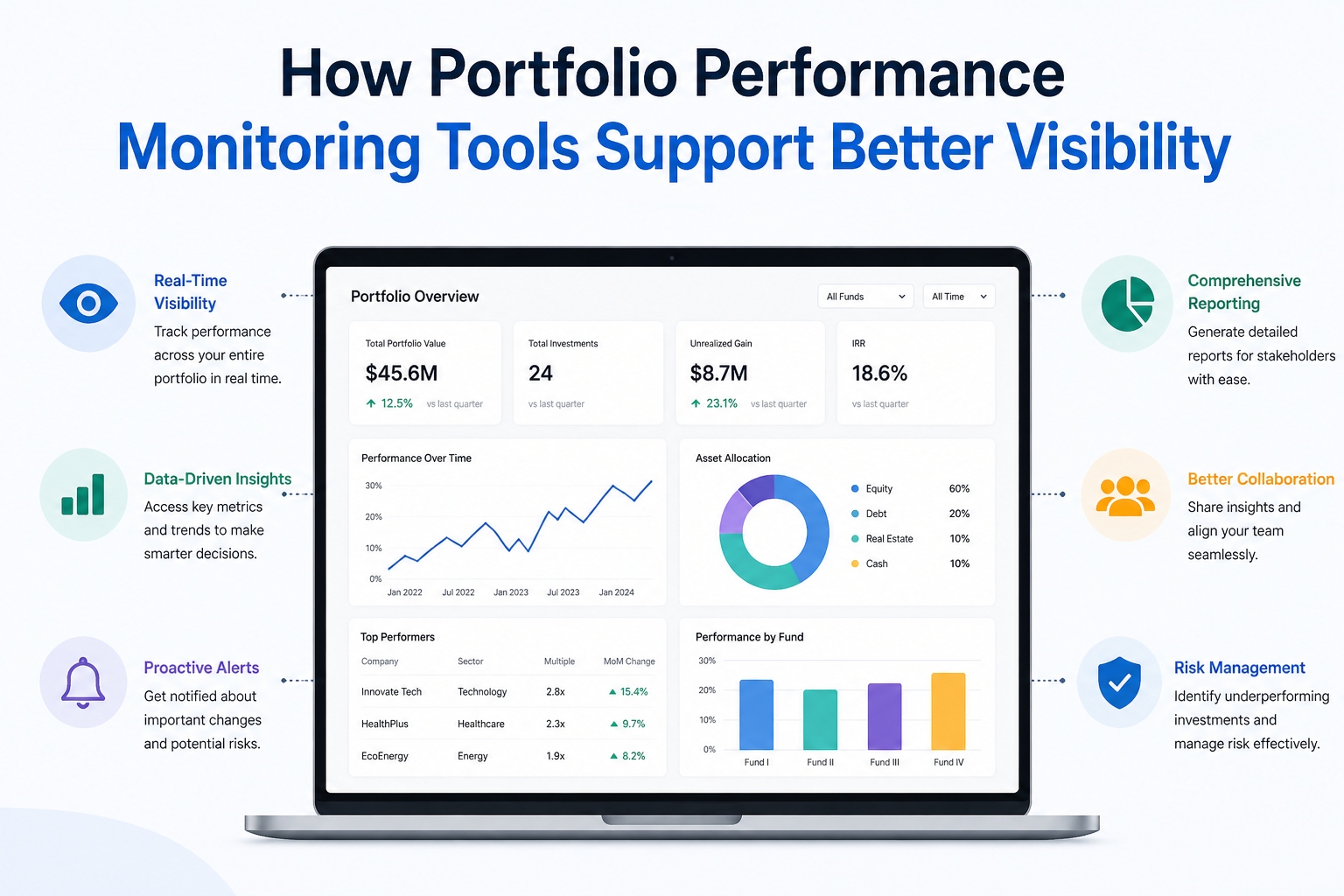
Modern investing requires timely information, not scattered spreadsheets or infrequent updates. This is why many firms depend on portfolio performance monitoring tools to track financial, operational, and strategic metrics consistently.
These systems help improve portfolio visibility for investors by presenting accurate data in organized dashboards. Instead of waiting for reports or chasing updates, investors can quickly see trends in revenue, margins, customer growth, cash flow, and other key metrics.
As a result, with these tools incorporated into their operations, investors will be able to enhance their approach to managing risks after the investment. Poor predictors such as a rise in churn rate and late payments would be spotted before developing into more severe issues by the tools.
This technology also adds value to the companies that form part of the portfolio. As opposed to taking time writing lengthy reports, entrepreneurs are able to provide an update in a timely and efficient manner.
Through the implementation of proper mechanisms, organizations ensure that they continually enhance their visibility of portfolios to investors based on clear judgment rather than speculation.
How Investors Can Strengthen Their Monitoring Strategies
Effective post-investment risk management techniques are contingent on the determination of relevant focal points of attention. It is for the investors to determine what aspects really matter, be it customer retention, quality of revenues, efficient operations, or effective cash management.
After determining what matters, investors will be in a position to use portfolio performance monitoring techniques to collect such information.
Communication rhythms also play a major role. Regular monthly check-ins, quarterly reviews, or milestone-based discussions create structure and accountability. These interactions make it easier to address challenges early and adapt strategies as the company grows.
Benchmarking is another powerful element. With industry comparisons and trend insights, investors can identify whether performance gaps are company-specific or market-driven. Using insights from portfolio performance monitoring tools helps investors review results with more context and precision.
Finally, improving monitoring techniques requires being prepared for any surprises. Shocks to the market, competition, supply chains, and regulation could impact performance abruptly. Effective monitoring techniques after investments allow detecting any such occurrences promptly, providing sufficient time for interventions.
As these improvements are applied consistently, they greatly improve portfolio visibility for investors and support better outcomes across the entire portfolio.
Conclusion
Strong monitoring after an investment is made is not optional—it is a core part of responsible investing. Well-designed post-investment risk monitoring strategies allow investors to understand what is working, what needs attention, and how to guide companies toward sustainable performance. Pairing these strategies with dependable portfolio performance monitoring tools gives investors continuous access to reliable insights, helping them make better decisions at the right time.
Most importantly, these combined efforts work together to improve portfolio visibility for investors. Investors will be able to utilize their resources efficiently, build strong connections with entrepreneurs, and create value for their invested companies. When it comes to the dynamic world of business, the individuals who value monitoring will always have an upper hand.

I’m the Co-Founder of Startup Steroid, where I help founders navigate the challenges of building a startup. From connecting with the right investors and talent to guiding marketing, legal, and MVP development, I work alongside entrepreneurs to provide practical support and clarity, helping them grow their ideas into successful, sustainable businesses.