Capital raising is one of the biggest achievements for a startup. This is the moment when all the required resources become available in order to create products, to get talent, access new markets, and grow fast. Yet, fundraising is not the end of the process of working with investors. What will follow can be crucial for the future success of a startup.
Many founders spend months preparing pitch decks, meeting investors, and negotiating terms, but they give less attention to maintaining investor relationships after the deal is complete. It could turn out to be an expensive error because apart from being a source of finance, investors could act as advisers, mentors, linkages, and also be there for a long term in the growth of your company.
This is when the concept of investor relationship management comes into play. It is an organized effort to communicate and connect with investors.
This guide describes what investor relationship management means, its importance, and the steps that expanding businesses need to take to establish strong relationships with their investors that contribute to growth.
What Is Investor Relationship Management?
Investor relationship management refers to establishing, managing, and cultivating relationships between an organization and its investors. It includes communications, transparency, reporting, expectations management, and more.
The purpose is to keep investors informed about the company’s progress while building trust and confidence over time.
In case of startups, the relationship between the investors and the startup is much closer compared to the one in a larger organization. The investors usually assist in advising the business on the way forward.
Because of this, Investor relationship management is not simply about sending updates. It is about creating productive partnerships that benefit both the startup and its investors.
Why Investor Relationship Management Matters
Strong investor relationships can influence many aspects of a startup’s success.
Investors that believe in the management team will stay with you even when the going gets tough. All startups face certain problems – these may be associated with sales, technology, hiring people, etc. Investors who know your history are more likely to help you out when you need it.
Good relationships can also lead to valuable opportunities. Investors often have extensive networks and industry knowledge. They can introduce founders to potential clients, strategic partners, advisors, and future investors.
Poor communication, however, will only cause confusion and loss of confidence among investors. The investor might lose interest if he is not getting much information.
This is why Investor relationship management should be considered an essential business function rather than an occasional administrative task.
The Benefits of Strong Investor Relationships
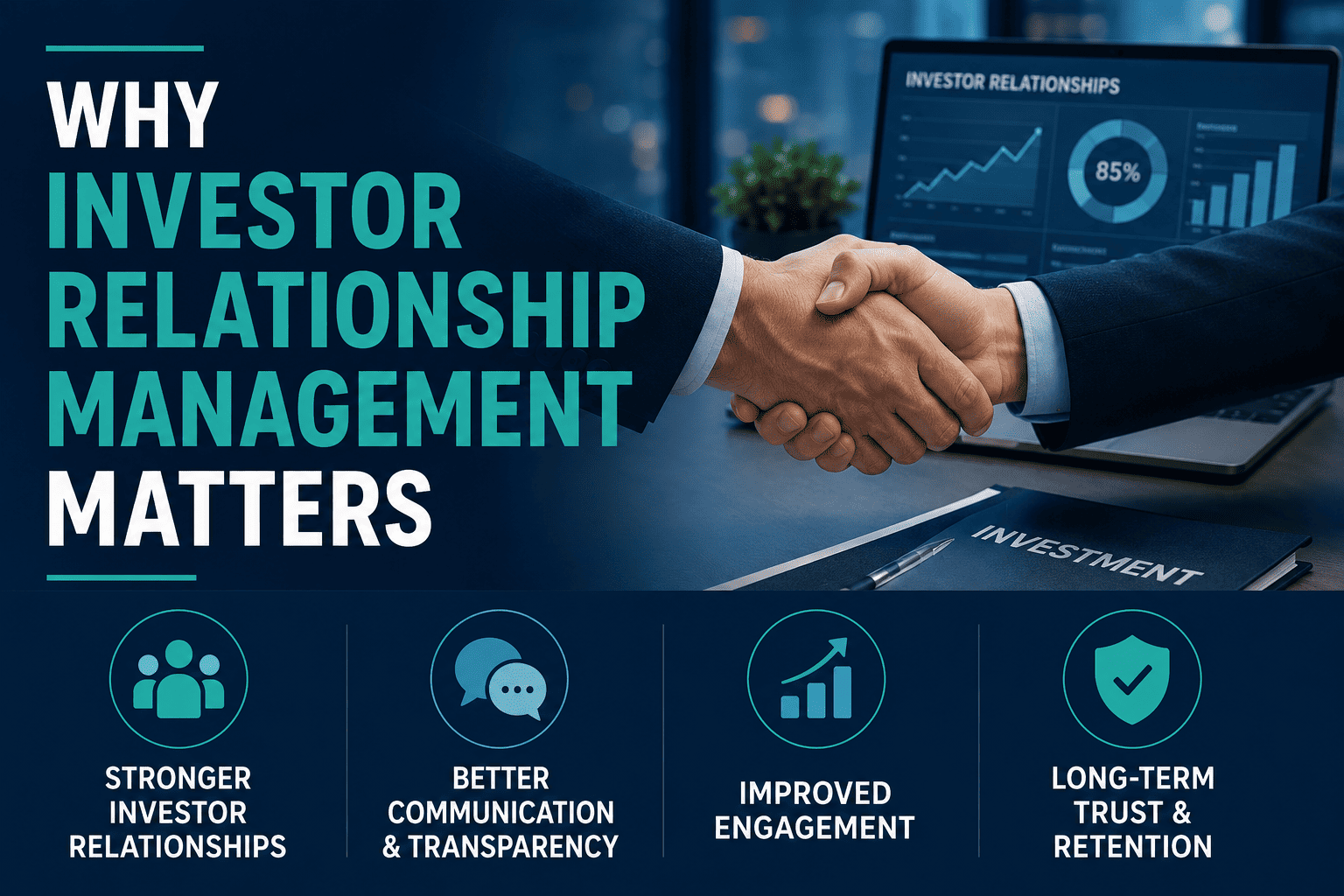
Effective investor relationships create benefits that extend far beyond funding.
Trust comes first because it allows founders and investors to work together efficiently and overcome challenges confidently.
A highly beneficial aspect would be increased communication since knowing the values of the organization, their priorities, and what challenges they face will make it much easier and more efficient to communicate with them.
Another benefit is access to expertise. Many investors have experience building and scaling businesses. Their insights can help founders make better decisions and avoid common mistakes.
It could be said that good Investor relationship management will aid future fundraising initiatives. Current investors who trust the company would usually agree to invest in future funding rounds as well as introduce the startup to new investors.
Building Investor Relationships Before Raising Capital
Investor relationships should not begin only when a startup starts fundraising.
Many successful founders spend months or even years building relationships with investors before seeking capital. This is an opportunity for investors to get to know the business, its management, and how far it has progressed.
These types of meetings would help build trust and credibility before starting the conversation regarding investments.
For example, the entrepreneur can provide business updates from time to time, go to business meetings, networks, or conduct preliminary discussions with potential investors.
When fundraising eventually begins, investors who have followed the company’s progress often feel more comfortable making investment decisions.
Starting early also creates a stronger foundation for future Investor relationship management after funding is secured.
Establishing Clear Communication Practices
Communication is the foundation of every successful investor relationship.
The investors wish to know how their startup is doing, what problems it is facing, and what its future plans are. Without continuous communication, there can be confusion in a short time period.
It is the responsibility of the founders to set up a communication schedule and adhere to it. Some startups have a month-on-month communication schedule, while others communicate once a quarter.
Often, consistency is more valuable than frequency. The investors need to know when updates are coming and what kind of information these updates would contain.
A clear communication process is one of the most effective ways to strengthen Investor relationship management.
What Investors Want to Know
Investors are generally interested in information that helps them evaluate company performance and future potential.
They need visibility on their revenue growth, customer acquisition, product development, hiring, market expansion, and financial performance.
Investors want to see challenges and risks as well. In contrast to what many founders think, investors are not expecting perfection. They know about challenges that any startup has. The main thing that matters to them is openness and transparency.
Sharing both successes and challenges creates credibility and demonstrates strong leadership.
The goal of Investor relationship management is not to present a perfect image but to provide an accurate picture of the company’s progress.
The Importance of Transparency
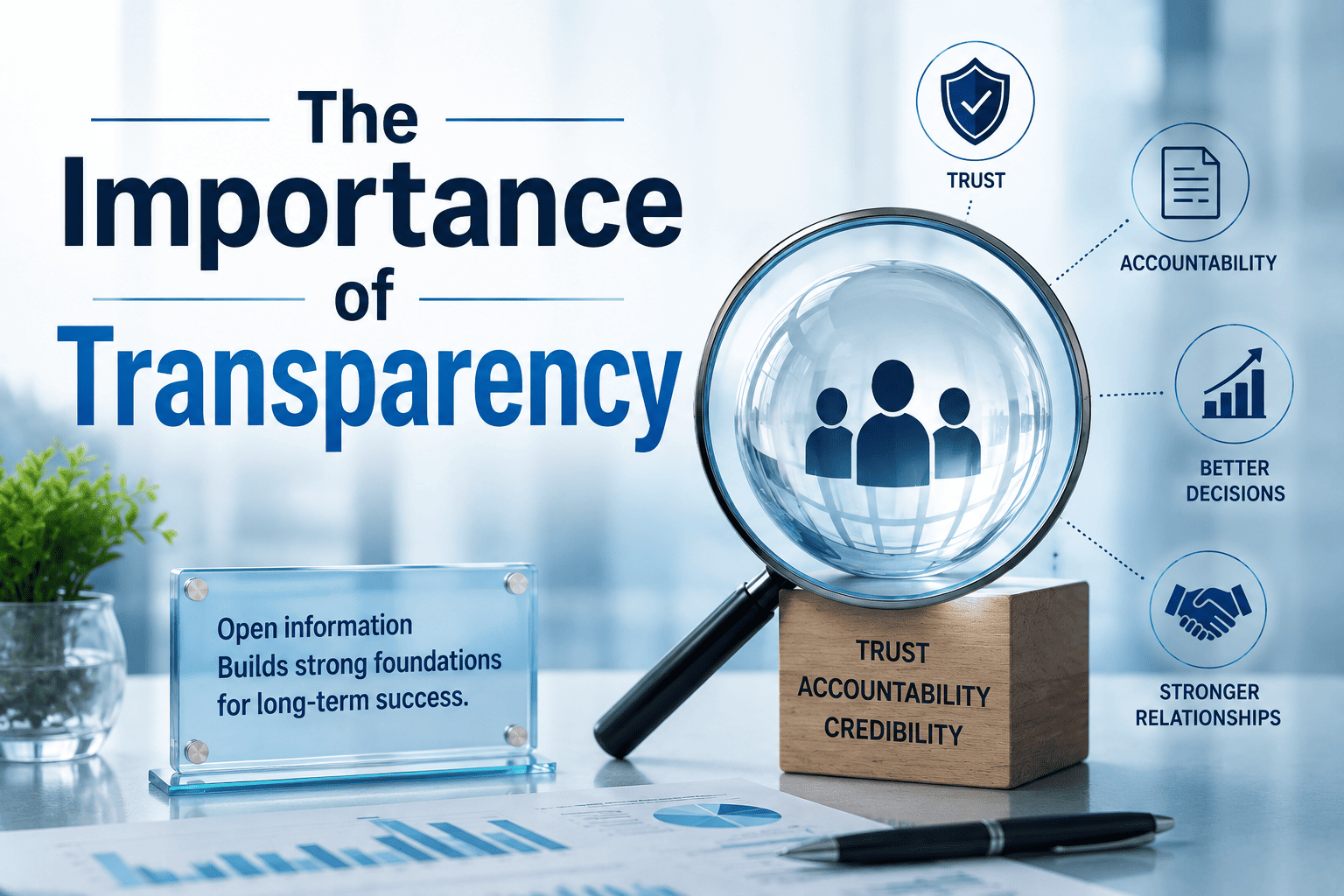
Transparency is one of the most important principles in investor communication.
Some founders are reluctant to share failures because of their fear of disappointing their investors. In reality, not sharing may create more problems than failure itself.
In most cases, people would like to know about any problem before experiencing it from the results.
Transparency creates a sense of trust that proves that one is both honest and responsible. On the other hand, transparency will help investors give support when needed.
It does not matter if there are delays in products’ release, revenue failure, or any other challenge; it is always helpful to communicate openly.
Transparency is key to having good IRM, especially during tough times.
Creating Effective Investor Updates
Investor updates are some of the most important ways to have great relations.
To create an effective investor update, it must contain a summary of accomplishments, achievements, priorities, and goals.
The most effective updates focus on meaningful information rather than overwhelming investors with unnecessary details.
Most of the time, startup companies incorporate their financial achievements, growth metrics, products, hiring processes, and objectives.
The founders need to consider including sectors where investors’ help will be beneficial. Investors like being provided with such options where they can participate besides money.
Regular updates are a core component of successful Investor relationship management because they keep investors informed and engaged.
Managing Investor Expectations
Expectation management is critical for maintaining positive investor relationships.
Expectations may become an issue if the founders have set up false expectations for their business.
Even though optimism plays an essential role, projections have to be based on realistic assumptions.
Investors know that the development of new companies is a risky process. They usually are ready to experience failures provided that these situations were managed in a proper way.
However, repeatedly overpromising and underdelivering can damage credibility.
The founders should concentrate on establishing attainable goals and giving genuine feedback regarding progress in achieving those goals. Such an approach will foster better trust and enhance investor relationship management for the long term.
Building Long-Term Trust
Trust is built through continuous behavior, not conversation.
Trust is built by founders through open communication, fulfillment of promises, and accountability.
Even if the outcomes are not as expected, there will be a high level of trust as long as the leader is solving the problem and proposing the next steps.
During tough times, trust becomes even more crucial. Investors will stick around if they know that founders are sincere, competent, and willing to solve issues.
Over time, trust becomes one of the most valuable assets in Investor relationship management.
Using Investor Expertise Effectively
Many startups fail to take full advantage of the knowledge and experience their investors can provide.
Investors normally have a lot of expertise in various fields, including fundraising, expansion, market entry, hiring top-tier executives, and forming strategic partnerships.
The founders must seek advice in cases where they encounter difficulties in making decisions and facing unknown situations.
It’s also essential to keep things balanced since although the investors’ input is invaluable, it’s up to the founders to lead the business and make decisions.
Strong Investor relationship management encourages collaboration while preserving clear leadership responsibilities.
Navigating Difficult Conversations
Every startup faces challenges at some point. Goals can be left unmet; products launched later than expected, or circumstances in the marketplace may prove unpredictable.
In any of these cases, it is vital to communicate.
It is critical that founders handle any issues in a timely manner, rather than letting things get worse before taking action. Communication will allow the investor to be made aware of the problem and help where possible.
Confrontational communication should focus on facts and their implications.
Professional handling of the issue could even enhance Investor relationship management as it indicates maturity and responsibility.
The Role of Board Meetings
Board meetings are significant in the context of investor engagement, especially for startups with institutional investors.
This is a chance for them to evaluate their performance and strategize for the future.
Effective board meetings are those that are well organized and are geared towards fruitful discussion and not long presentation.
The founders need to send out documents ahead of time and engage in fruitful dialogue to learn from the experience of board members.
They can be useful supplements to investor relations and not substitutes for them.
Technology and Investor Relationship Management
As startups grow, managing investor relationships can become increasingly complex.
Multiple investors, communication channels, documents, and reporting requirements can create administrative challenges.
The use of technology would make these tasks easier for an organization. There is dedicated software that organizations could use to better manage their investor data, communication, reporting, and updates.
Technology helps organizations ensure the same quality and standardization of information.
For startups with expanding investor networks, technology can play a valuable role in supporting effective Investor relationship management.

Common Mistakes Startups Should Avoid
Several mistakes can weaken investor relationships.
Inconsistency in communication can be another common blunder. An investor may feel worried about any inconsistency in communication.
Another mistake is highlighting only positive information. Honesty is valued by investors, and they usually prefer balanced reports, including both successes and difficulties.
Some founders do not bother asking for help when it is needed. An investor may have valuable contacts and information that will be beneficial for your business.
Overpromising is one more common problem. Unreasonable forecasts might inspire enthusiasm at first but would affect credibility negatively if the expectations are not fulfilled.
Avoiding these mistakes helps create stronger and more productive relationships.
Investor Relationship Management During Future Fundraising
The quality of existing investor relationships often influences future fundraising outcomes.
New investors tend to talk with existing ones prior to investing in something. Good opinion from existing investors increases credibility and confidence.
Existing investors may also take part in future financing rounds or introduce new investors to the founders.
As such, Investor Relationship Management is supposed to be seen as a long-term commitment rather than a short one.
Relationships established today will have a great impact on future fundraising prospects.
Measuring the Success of Investor Relationships
Like all other aspects of business, investor relations also need to be reviewed periodically.
The founders may check their level of engagement through observation of investors’ involvement and their readiness to assist them.
Other signs of engagement include follow-on investments, introductions, referrals, and general investor satisfaction.
Feedback can be another source to spot areas of improvements.
Monitoring relationship quality ensures that Investor relationship management remains effective as the company grows.
Creating a Culture of Investor Engagement
The relationship with investors should not be limited only to fundraising or board meetings.
Startups that have achieved success develop a culture of constant engagement and communication.
It is about sharing the journey through updates, celebrating milestones, openly addressing challenges, and collaborating where necessary.
Investors will always be interested in the activities of a startup once they identify themselves with its purpose and growth.
An engaging culture helps build stronger relationships and ensures sustainable growth.
Conclusion
Fundraising is just one aspect of ensuring success for a startup venture. Having a good relationship with investors is another crucial factor. Investors will be able to give strategic advice, industry knowledge, networking opportunities, and continuous help in the growth process of the organization.
Good Investor relationship management enables founders to develop trust, better communication, and manage expectations. This way, investors feel more confident and involved in the organization’s progress.
Through being transparent and consistent, and working in collaboration, startups can build relationships that go beyond the aspect of financing. Such relationships tend to be useful assets for fundraising and business growth.
As startups continue to scale, Investor relationship management should remain a key priority. Companies that invest in building strong investor relationships are often better positioned to navigate challenges, seize opportunities, and achieve sustainable success.
FAQs
1. How early should a startup start thinking about investor relationship management?
Relationship management with investors is supposed to be initiated by a company long before it starts looking for investments. This way, the founders can spend time building relationships with their investors who will know about the company by the time fundraising takes place.
2. Can investor relationship management help even if a startup is not planning to raise another round soon?
Indeed. Investor relations do not consist of preparing for the next round alone. Healthy relations will ensure that your startup will get strategic insights, introductions within the industry, recruitment, referral of customers, and constructive criticism. The investors will be involved in your startup’s development, not just fundraising efforts.
3. What kind of bad news should founders share with investors, and when?
Material issues like the failure to meet financial targets, product launches that have been put off, problems in recruitment, regulatory issues, or changes in the market need to be communicated by the founders as soon as possible. In terms of investor relations management, timing is important. Early communication will give investors a better insight into the company.
4. How detailed should investor updates be without overwhelming investors?
Updates for investors should always be brief but relevant. Founders should not include all operations within an update; rather, they should include those which will help the investors to learn the dynamics of their business, risks, and where their input could be useful.
5. Is it a mistake to contact investors only when the startup needs something?
In most cases, yes. When a founder contacts the investor just when he needs funding, introduction, or help out of an emergency, the relationship becomes more transactional in nature. An effective investor relationship management program should be one in which there is frequent and balanced communication between the two parties.
6. How can founders ask investors for help without appearing dependent?
The trick lies in being very precise. Rather than asking for general favors, the entrepreneur must detail the issue, describe what kind of help is required, and convince the investor of his suitability in solving the problem. The process of investor relationship management becomes more effective in this way.
7. What are the signs that a startup’s investor relationship management strategy is actually working?
Strong strategies can often manifest themselves through the response by the investors, their introduction, participation in subsequent funding rounds, active communication during updates and board meetings, and their overall confidence in the management team. Strong investor relations management typically results in better trust, rather than merely improved reporting.
8. Should investor communication change as a startup grows and adds more investors?
Sure. As the circle of investors grows, there is more structure involved in communicating. What was suitable when there were just a handful of angel investors would not necessarily be sufficient anymore with the presence of institutions, board members, and other stakeholders.

I’m the Co-Founder of Startup Steroid, where I help founders navigate the challenges of building a startup. From connecting with the right investors and talent to guiding marketing, legal, and MVP development, I work alongside entrepreneurs to provide practical support and clarity, helping them grow their ideas into successful, sustainable businesses.