Fundraising rarely begins when a founder sends the first pitch deck. In many cases, the groundwork starts months earlier, through conversations that may seem informal but can have a meaningful impact on what happens later.
One of the most useful early conversations is the investor intro call. Usually short and focused, this conversation gives founders an opportunity to introduce their company, understand investor fit, and establish a relationship before they actually need capital.
A 10-minute conversation may not sound significant compared with a full fundraising meeting. However, when approached strategically, it can become the first step toward a long-term investor relationship.
The key is to stop viewing these calls as miniature pitch meetings. They are relationship-building conversations. They allow founders to get on an investor’s radar, understand what the investor looks for, and create a reason to reconnect when the timing is right.
This is where investor relationship management comes in handy. Rather than approaching each conversation with investors separately, founders have the ability to develop a well-planned strategy surrounding the meetings.
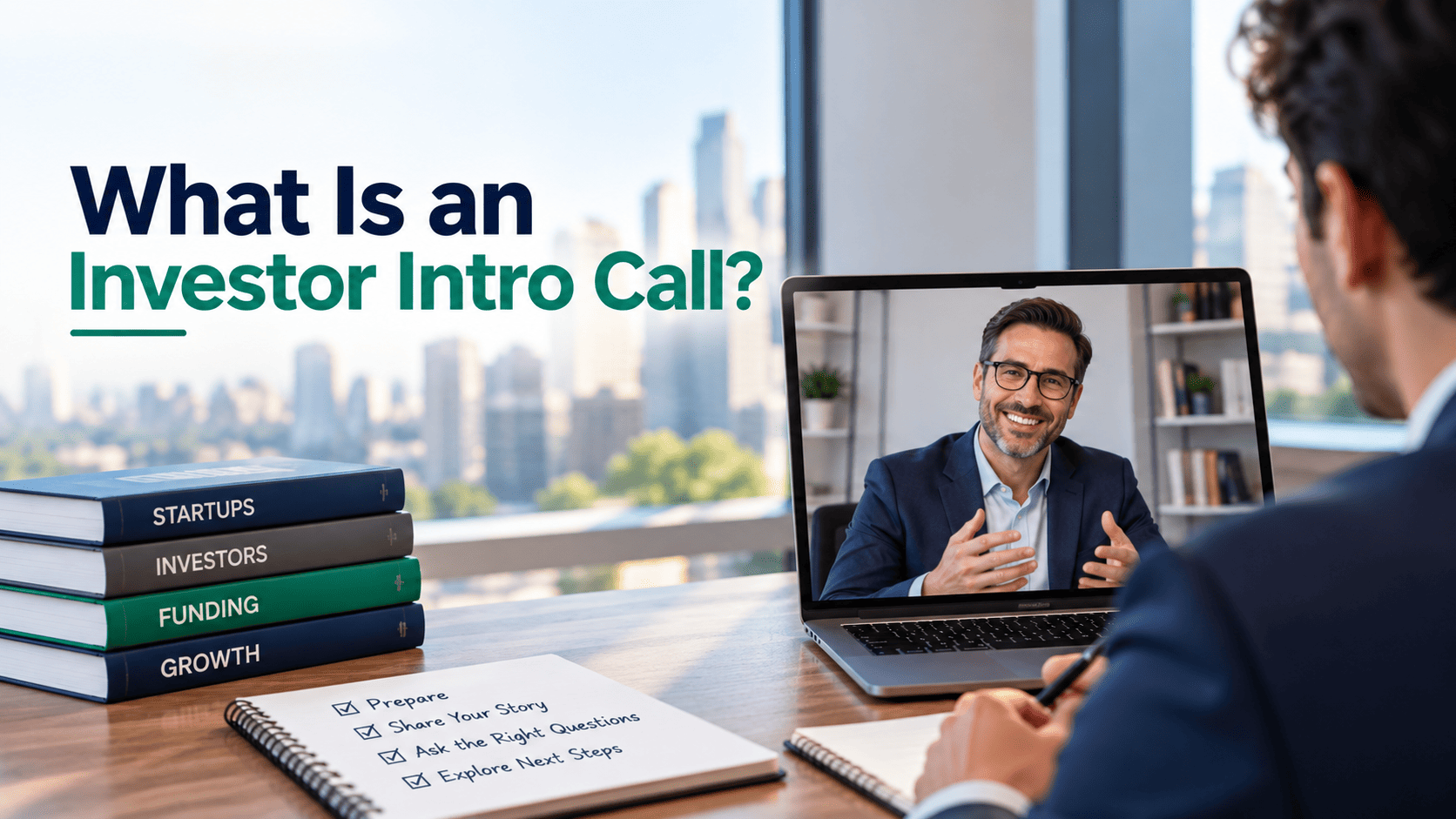
What Is an Investor Intro Call?
The introduction call is a first meeting between a startup entrepreneur and a prospective investor who are yet to go through the fundraising process.
The purpose is usually not to secure an investment during that first conversation. Instead, it is to establish familiarity and determine whether there is enough mutual interest to continue the relationship.
During the discussion, it will probably cover the brief introduction of the company, its problem-solving ability, the market opportunity, traction, and the overall vision of the company founder. The other party may give an introduction about their investments and focus areas.
Because the conversation is short, founders need to resist the urge to cover everything. An intro call should create context, not overwhelm the investor with information.
Think of it as opening a door rather than trying to walk through the entire building.
Why Should Founders Talk to Investors Before Raising Money?
Starting investor conversations early gives founders something that becomes increasingly difficult to obtain as a fundraising deadline approaches: time.
When a founder approaches an investor immediately before raising capital, the investor has to understand the business and evaluate the opportunity within a compressed timeframe. There is little room for familiarity to develop.
An early relationship changes that dynamic.
The investor can watch the company progress, understand how the founder responds to challenges, and see whether the business is moving toward the milestones that matter. The founder, meanwhile, gains a better understanding of the investor’s expectations.
This does not guarantee funding. It simply creates a stronger starting point when the formal fundraising process begins.
Good investor relationship management is built around this idea. Not every investor conversation needs to produce an immediate outcome. Some relationships need time to develop before they become relevant.
The Real Value of a 10-Minute Conversation
Ten minutes may seem too short to make a meaningful impression, but its value comes from its purpose.
A founder does not need ten minutes to explain every feature, financial projection, competitive advantage, and future product roadmap. Trying to do so can actually make the conversation less effective.
Instead, ten minutes can be enough to answer a few important questions.
Who is the founder? What does the company do? Why does the problem matter? What evidence suggests the business has potential? Why is this particular investor worth speaking with?
Once those questions are answered, the next step becomes easier to determine.
If the investor sees potential, they may ask for more information, request a follow-up conversation, or suggest reconnecting after a particular milestone.
That is a successful intro call.
The objective is not to close the round. It is to create enough interest for the relationship to continue.
When Should Founders Start Having Investor Intro Calls?
There is no universal number of months that every founder should follow.
The right timing depends on the startup’s stage, fundraising plans, industry, traction, and investor landscape. A company entering a specialized market may benefit from starting conversations much earlier because finding the right investors can take considerable time.
For other startups, a few months of advance relationship-building may be sufficient.
The more important consideration is whether the founder has something meaningful to discuss.
An investor does not need to hear a polished fundraising pitch, but there should be enough substance behind the conversation to make it worthwhile. A product milestone, early customer traction, revenue growth, market expansion, partnership, or meaningful business development can give the investor something concrete to remember.
Early investor relationship management works best when relationships are connected to real company progress rather than constant requests for attention.
How Should Founders Find the Right Investors?
The goal should never be to build the biggest possible investor list.
A founder could collect hundreds of names and still have very few genuinely useful relationships. What matters is relevance.
Start by identifying investors who understand the company’s industry, stage, geography, business model, and likely funding requirements. Then look beyond those basic criteria.
Consider whether the investor has experience with similar businesses. Look at their portfolio. Understand the types of founders they typically back. Consider whether they can provide useful introductions, industry knowledge, hiring support, or strategic guidance.
The founder should also research the individual they will speak with, not just the investment firm.
An investor may work at a fund that invests broadly but personally focus on a specific sector or stage. Understanding that distinction can make the introduction much more relevant.
This level of preparation is an important part of investor relationship management because relationship quality starts with knowing who you are actually building a relationship with.
What Should Founders Talk About During the Call?
A strong intro call should feel like a conversation, not a presentation being delivered at high speed.
Start with a concise introduction to yourself and the company. Explain the problem you are addressing and why it matters. Give the investor a simple picture of what your company does and share the most meaningful evidence of progress.
The founder should then explain why they wanted to speak with that specific investor.
That final point is often overlooked.
Investors receive countless introductions. Saying, “I thought you might be interested in our company” is not particularly compelling.
Explaining that the investor has experience in the company’s market, has backed similar businesses, or has relevant expertise gives the conversation a clear reason for happening.
The conversation should then shift naturally toward the investor.
Ask about their current investment focus, the stages they are most interested in, and what they typically want to see before engaging with a company.
The founder is evaluating the investor too.

What Questions Should Founders Ask Investors?
An intro call should help founders understand whether an investor could be a good long-term partner.
Rather than asking questions simply to fill time, focus on questions that reveal fit and expectations. Founders can ask what sectors the investor is currently prioritizing, which startup stages they prefer, what milestones tend to get their attention, and how they typically support portfolio companies.
It can also be useful to ask whether the investor would be interested in receiving occasional company updates.
That simple question can turn a one-time conversation into an ongoing relationship.
The founder can then use investor relationship management to record what the investor cares about and determine when a future update would actually be relevant.
What Should Founders Avoid During Intro Calls?
The biggest mistake is treating a 10-minute introduction as a complete fundraising pitch.
Trying to squeeze an entire pitch deck into a few minutes often creates more confusion than interest. The investor should leave the conversation understanding the opportunity, not trying to remember dozens of disconnected details.
Founders should also avoid contacting investors without researching them.
A generic introduction suggests that the founder is approaching investors based on quantity rather than fit. It can also waste everyone’s time if the investor does not invest at the company’s stage or in its market.
Another mistake is asking for an investment too early.
If the purpose of the conversation is to establish a relationship, suddenly turning it into a hard fundraising pitch can create the wrong impression.
Finally, founders should not exaggerate progress simply to appear more attractive. Credibility is far more valuable than a temporarily impressive story.
How Can Early Investor Conversations Help Founders Improve?
Investor conversations can provide useful signals before the fundraising process officially begins.
Suppose several investors independently ask about customer retention. Another group repeatedly questions the company’s pricing model. Others want more evidence that the market is large enough.
Those recurring questions can reveal areas where the founder’s business or fundraising story may need more clarity.
That does not mean founders should change their strategy every time someone gives an opinion. Investors can be wrong, and their perspectives can differ significantly.
The value comes from identifying patterns.
Early conversations give founders time to address legitimate concerns before they become obstacles during a formal fundraising process.
This is one of the practical benefits of investor relationship management. Because communication is recorded, founders can see patterns emerge rather than relying on their memories.
How Does Investor Relationship Management Fit into Fundraising?
As the number of investors increases, it becomes harder to remember all of the interactions that have occurred.
One investor may ask to reconnect after a revenue milestone. Another may want a product update. Someone else may introduce the founder to a potential customer. A different investor may say the company is too early but ask to stay informed.
These pieces of information will get lost easily if there is no proper system to keep track of them.
This is where investor relationship management becomes an important part of the fundraising process.
Investor relationship management plays a crucial role in keeping founders aware of their relationships. Instead of just storing the name and email ID of the investor, they are able to remember past communication, investment interest, inquiries, introductions, follow-up promises, and milestones.
That context matters.
When a founder reconnects six months later, they should know what was discussed previously and why the investor wanted to hear from them again.
The relationship should feel continuous rather than restarted from zero.
What Should Founders Track After an Intro Call?
A simple process can make follow-up significantly easier. After each meaningful conversation, founders should capture:
- What was discussed and what the investor found interesting
- The investor’s preferred stage, sector, and investment criteria
- Questions or concerns raised during the conversation
- Any information the founder promised to send
- The agreed next step and the appropriate time to reconnect
This information becomes particularly valuable when the founder has dozens of investor relationships.
A strong investor relationship management process ensures that follow-ups are based on context rather than guesswork.
It also prevents one of the most common fundraising mistakes: forgetting a promising relationship simply because the company became busy.
Should Founders Send Regular Investor Updates?
Regular updates can be valuable when they are relevant and welcomed by the investor.
The purpose is not to repeatedly ask whether the investor wants to invest. Instead, updates allow investors to see how the company is developing.
Such an update could be related to a significant milestone for the company, customer progress, financial progress, product development, partnership, and even change in the company’s direction.
The update should have substance.
Sending frequent messages without meaningful progress can weaken the relationship rather than strengthen it.
The best way is to connect with people who have something interesting to share and develop a rhythm that works.
This is yet another thing that can be helped by good investor relations management. It is possible to keep track of investors who need to be kept up-to-date and what is important to them.
What Happens If an Investor Says No?
A “no” is not always the end of a relationship.
Investors may pass for reasons that have little to do with the quality of the company. The startup may be too early, the investor may have already made a similar investment, the check size may not fit, or the fund’s priorities may have changed.
There is an important difference between “no” and “not now.”
If the investor remains interested in following the company, the founder should keep the relationship active without becoming overly persistent.
For example, if an investor says they would reconsider after reaching a particular revenue milestone, that information should be documented and revisited when the milestone is achieved.
This is where investor relationship management turns a rejection into a relationship that can potentially be revisited under better circumstances.
How Should Founders Follow Up After an Intro Call?
A good follow-up should be timely, concise, and connected to the conversation.
Always thank the investor for their time and mention something discussed in the meeting. When the investor has requested any information, send the same in due time. If anything was discussed about a future milestone, note it down and reconnect at the right time.
Founders should avoid sending a generic “just checking in” message without a reason.
Every follow-up should answer a simple question: Why is it useful for this investor to hear from me now?
That principle keeps investor relationship management focused on relevance rather than frequency.
How Can Founders Make Intro Calls More Effective?
Preparation matters, even when the conversation is only ten minutes long.
Before the call, founders should know exactly why they want to speak with the investor and what they want the investor to remember afterward.
They should also prepare a concise explanation of the company that can be delivered naturally rather than memorized word-for-word.
Most importantly, founders should listen.
A founder who spends the entire call talking may miss valuable information about the investor’s interests, concerns, and expectations. A good conversation is two-sided.
The investor should finish the call knowing why the company is interesting, while the founder should finish knowing whether the investor is worth continuing to build a relationship with.
When Should Founders Skip an Intro Call?
Not every investor deserves a meeting.
If there is no meaningful alignment between the startup and investor, reaching out may simply create unnecessary work. The same is true if the founder has nothing meaningful to discuss and is only contacting investors because they believe they should start networking.
Timing also matters.
If the company is dealing with critical operational problems, has no meaningful progress to share, or is far from being ready to have productive investor conversations, spending significant time on investor outreach may be counterproductive.
Building relationships early is useful, but founders still need to prioritize the business itself.
Investor relationship management should support company-building, not distract from it.
The Long-Term Advantage of Starting Before You Need Capital
The most valuable investor relationships rarely appear overnight.
They develop through repeated interactions, meaningful updates, honest conversations, and evidence of progress. A short introductory call can be the first of those interactions.
Founders who wait until they urgently need capital may find themselves trying to build trust and raise money at the same time.
Starting earlier separates those two activities.
The founder can focus on building the company while gradually developing relationships with investors who may eventually become relevant to the next round.
That is the real strategic value of investor relationship management. It gives fundraising a longer runway and helps founders approach investors with context instead of urgency.
Conclusion
Investor intro calls are not a shortcut to fundraising, and they should never be treated as one.
Their real value lies in creating familiarity before the pressure of a fundraising round begins. A 10-minute conversation can introduce a founder, establish investor fit, create an opportunity for future communication, and open the door to a much deeper relationship.
The most effective founders understand that investors are not simply sources of capital. The right investors can become long-term partners, advisors, connectors, and advocates for the business.
That relationship takes time to build.
Founders should therefore focus less on how many investors they can contact and more on which relationships are worth developing. They should research investors carefully, make conversations relevant, follow up thoughtfully, and share meaningful progress over time.
Most importantly, they should build a repeatable approach to investor relationship management.
When investor conversations, preferences, follow-ups, milestones, and relationship history are organized, founders can spend less time trying to remember who said what and more time building relationships that matter.
A 10-minute intro call may be short.
But when it is the beginning of a well-managed relationship, it can become one of the most valuable conversations a founder has before the fundraising process officially begins.
FAQs
1. Can an investor intro call be useful even if the investor is not ready to invest?
Yes. The potential investor may have a genuine interest in investing in the company but feel that the timing isn’t right. In such a scenario, the meeting can set the stage for building a relationship that will develop as the company reaches certain milestones. Good investor relations management allows founders to know why an investor decided not to invest.
2. How can founders tell whether an investor is genuinely interested after a short call?
Interest may be displayed through action instead of words on the part of the investor. The investor may ask for a presentation, some metrics, to schedule a follow-up meeting, make an introduction, or receive further information in the future, and these are signs that it is worth pursuing the dialogue.
3. Should founders change their fundraising strategy based on feedback from early investor conversations?
Not necessarily. One investor’s perspective alone should not define a business strategy. Nonetheless, multiple queries or problems raised by some relevant investors may indicate gaps in the company that require more emphasis. Founders may capitalize on this information to enhance their pitch or data but not let each piece of feedback control business decisions.
4. What should founders do when an investor asks them to reconnect after reaching a specific milestone?
The founder must record the milestone and estimated timeline right away instead of remembering later. Once the milestone is completed, the founder can communicate the update to the investor in one sentence by citing the previous discussion. This is part of investor relationship management since it will transform a future vague discussion into a tangible relationship.
5. Can early investor conversations create value beyond securing funding?
Absolutely. The right investor can introduce you to possible clients, strategic partners, experienced people, experts from the field, and even more investors. Even without an investment, early communication can build your network and give you valuable insights. That is why the role of managing investor relations goes far beyond finding investors.
6. How many investors should a founder speak with before starting a formal raise?
There is no ideal number that applies to every startup. The priority should be building a focused group of relevant relationships rather than maximizing the number of conversations. Founders should consider investor fit, stage, industry, check size, geography, and potential strategic value when deciding who belongs in their network.
7. How long should founders continue communicating with an investor who has previously passed?
However, as long as the investor is relevant and interested in the future progress of the start-up, the communication process may proceed. The rate will have to be based on the purpose of the pass and personal preferences of the investor. Investor relationship management may provide some guidelines on how often a founder needs to communicate.
8. What is the biggest difference between an investor intro call and a fundraising meeting?
The primary function of an introductory call is context-building and checking for compatibility and need to proceed with the discussion. In a fundraising session, one has to do an evaluation of the investment, look into the finances of the company, and its prospects. Mixing the two may render an early-stage conversation too businesslike.

I’m the Co-Founder of Startup Steroid, where I help founders navigate the challenges of building a startup. From connecting with the right investors and talent to guiding marketing, legal, and MVP development, I work alongside entrepreneurs to provide practical support and clarity, helping them grow their ideas into successful, sustainable businesses.