
Every fund receives a steady stream of inbound pitches. The founding teams reach out to potential investors via cold email pitches, by completing website forms, through LinkedIn messaging, or even through their connections. This way, there is a constant inflow of potential deals for all investment funds; however, most of them fail at managing this inflow systematically.
This is where a deliberate structure becomes essential. When inbound interest is organized effectively, it strengthens deal flow venture capital quality and gives emerging funds a reliable starting point for their sourcing efforts. A consistent system also makes VC deal pipeline management easier for partners, analysts, and the operations team.
Why Inbound Pitches Matter More Than Most Funds Realize
Inbound pitches represent a unique category of deal flow because these founders are already motivated to speak with the fund. They have done their research, understand the investment thesis, or were encouraged by trusted members of the ecosystem. Yet many funds continue to treat inbound interest casually, responding when they find time or reviewing submissions only during specific periods.
The absence of structure in such an approach affects the efficiency of venture capital transactions because of dependency on one’s memory and personal mailbox. Nevertheless, an organized way ensures that all proposals are dealt with consistently regardless of the format used to convey them; thus, creating consistency and developing venture capitalists’ brand in the mind of entrepreneurs.
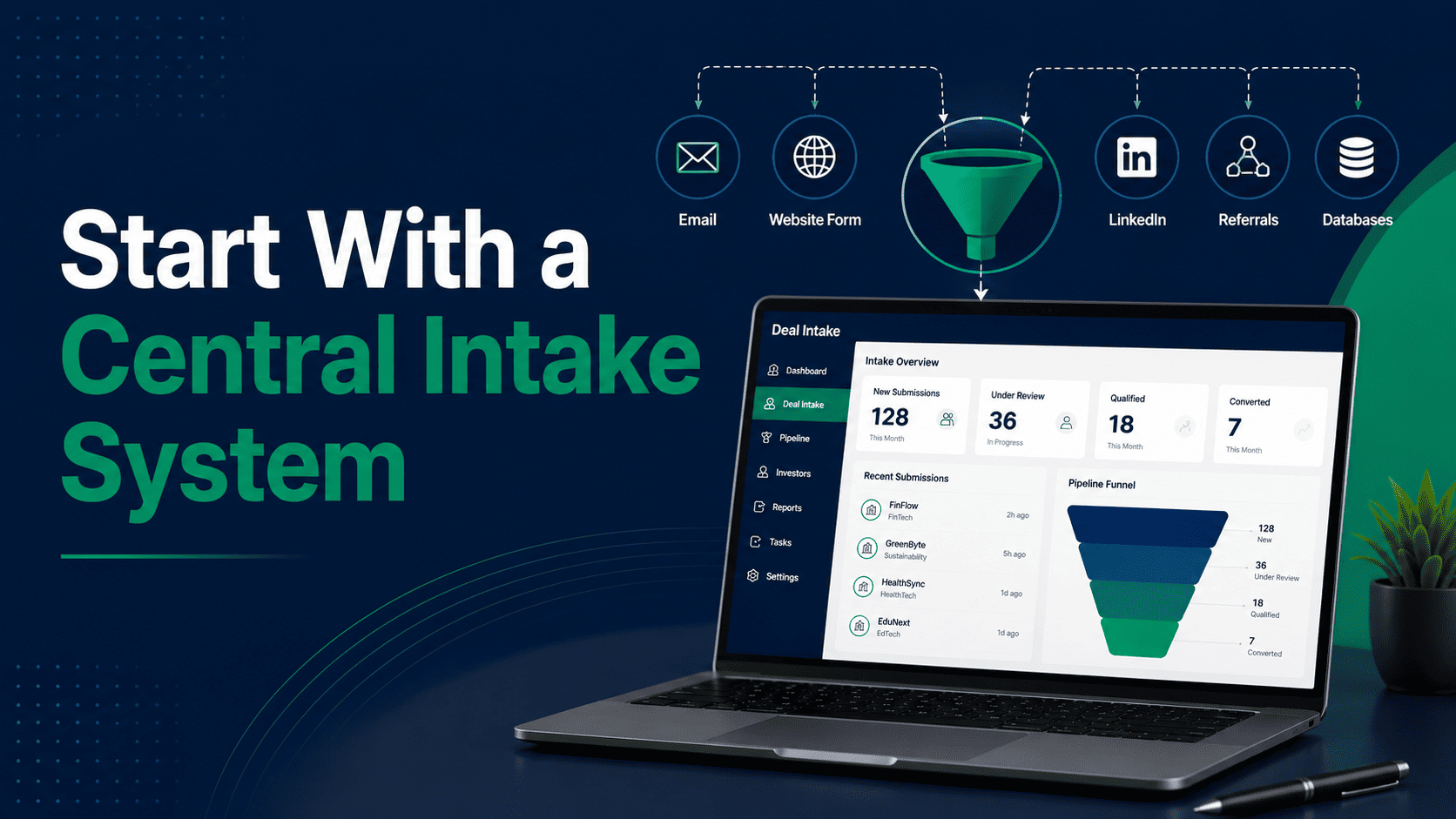
Start With a Central Intake System
The most important step in creating a structured funnel is making sure every inbound pitch enters a single system. Many teams still scatter their intake across emails, personal notes, Excel files, and messaging platforms. This fragmentation guarantees missed opportunities.
This is resolved by having a single point of intake. This can either be a form on your website, an intake link that can be customized to your liking, or even through your CRM. The point is to make sure that there are no loose ends when it comes to knowing where inbound proposals are.
An intake process immediately improves the quality of the venture capital deals process since there is no uncertainty involved. Moreover, the foundation for managing the venture capital deal pipeline is strengthened since everything is clear and documented.
Sort Inbound Pitches Using Meaningful Filters
Once every pitch flows into one place, the next step is categorizing the information. Instead of simply tagging companies by sector or stage, it helps to focus on the filters that matter most to your thesis. This may include traction readiness, revenue model type, geographic fit, or team composition.
Organizing inbound opportunities through these filters allows the team to scan large volumes quickly. It becomes easier to identify outliers, repeat patterns, and potential red flags. More importantly, this structure makes your internal review meetings far more productive because partners can immediately see how each pitch aligns with the fund’s direction.
Clear sorting also improves your ability to evaluate the strength of your deal flow venture capital funnel. Patterns in sector concentration, founder profiles, and quality indicators become more visible, making long-term VC deal pipeline management decisions more informed.
Use a Consistent Evaluation Method
Inbound pitches often vary widely in quality. Whereas some entrepreneurs have decks that are well-positioned, others may just be offering preliminary slides or other documents. In the lack of a proper framework that reviews all the pitches, there is no proper way of making a decision because everything is based on individual judgment.
A straightforward evaluation method can solve this. It does not need to be overly complex, just a structured way to assess the problem clarity, founder capability, traction signals, market readiness, and competitive approach. There are a number of advantages that result from ensuring that all pitches follow one standard measurement process. First, junior members of the team feel confident about doing an assessment of deals before bringing them to the partners.
This consistency has a direct positive impact on VC deal pipeline management, reducing internal back-and-forth and creating a shared understanding of what qualifies as a promising opportunity. Over time, this approach sharpens your deal flow venture capital quality by eliminating guesswork.
Respond Quickly and Set Clear Next Steps
One of the biggest complaints founders share is delayed or unclear communication. While some get no reply at all, others must wait for weeks just to receive confirmation of receipt. Not only does this affect the reputation of the venture capital fund, but it also means that opportunities are being lost due to the founders pursuing other avenues of investment.
Creating a simple communication rhythm can transform your inbound process. A brief acknowledgment within two days, along with clear actions that will be taken subsequently, helps to ensure that the founders remain on board. Even if you do not believe that the proposal is one that fits with your business model, it shows professionalism when rejecting a proposal politely and in a timely manner.
Predictable communication also strengthens your internal system. Team members know what needs action and what can be archived, making VC deal pipeline management smoother and more organized.
Hold Regular Review Sessions
A funnel structure is effective only when there is regular review by the team of the same. Having regular meetings for reviewing the pipeline every week or every other week makes sure that incoming pitches pass through the evaluation stage rather than getting accumulated at one point.
These meetings create discipline in teams and prevent decision-making from being delayed. They help introduce some clarity in the funnel so that every proposal is properly considered. Such a practice directly leads to good venture capital deal flow management results.
Track Insights and Improve Over Time
Once a structured inbound system is in place, patterns will start to emerge. You’ll notice which sectors consistently bring stronger founders, which referral channels generate higher-quality pitches, and which types of opportunities rarely convert. Tracking these insights helps refine the intake process, adjust outreach strategies, and strengthen your evaluation criteria.
Such constant improvement is crucial for staying flexible enough to change according to the market. Such continuous improvement increases the volume and quality of deal flow and makes VC pipeline management more future-proof.

Conclusion
Turning passive inbound pitches into a structured funnel is one of the most effective ways to create consistency in your sourcing workflow. By centralizing intake, organizing information, evaluating consistently, communicating clearly, and reviewing regularly, emerging funds can build a predictable and reliable system that respects founders and strengthens decision-making. A well-structured system improves both deal flow venture capital output and the overall efficiency of VC deal pipeline management, giving your fund a lasting advantage in a competitive market.

I’m the Co-Founder of Startup Steroid, where I help founders navigate the challenges of building a startup. From connecting with the right investors and talent to guiding marketing, legal, and MVP development, I work alongside entrepreneurs to provide practical support and clarity, helping them grow their ideas into successful, sustainable businesses.