Raising capital is a milestone for every startup, and for founders, it is imperative to understand the thought process of startup investors, what they look for when investing in startups, and how they build trust with founders. This blog goes into detail about how investors look for things, what they look out for, and how founders can build trust with them.
Navigating the world of startup investments can seem overwhelming. From determining the appropriate investor to providing accurate metrics to avoiding common pitfalls, the entrepreneur needs to be strategic about each step taken. At the end of this guide, you will be aware of how to approach funding with clarity.
The Role of Startup Investors in Building Ventures
Startup investors are more than just sources of capital. They are individuals or organizations that provide the financial support necessary to grow a company in exchange for equity or future returns. Investors include angel investors, venture capitalists, micro VCs, and sometimes corporate investors. Each of these has a unique approach to assessing risk and determining potential returns.
Investors matter because they bring more than money to the table. They often provide mentorship, access to networks, and credibility that can accelerate a startup’s growth. For founders, understanding the priorities and motivations of different investors is key. This information will help in tailoring pitches, anticipating queries, and showing preparedness for long-term growth.
The first step in seeking such funding is to understand the process that an investor goes through in order to determine which startups they should invest in. An investor will look into three main aspects when considering a startup for investment: the team, the market opportunity presented by the product or service offered by the startup, and the operational preparedness of the startup.
Understanding Founder–Market Fit
One of the most important terms you need to know about investing in startups is “founder-market fit.” Founder-market fit is defined as the degree to which the founder’s experience, skills, and passion are aligned with the market they are trying to serve. This is one of the key things that investors look for because it shows their commitment to the business or their passion for solving a specific problem.
A founder who has experience in that industry or has dealt with that problem themselves is something that resonates well with investors. While it is not sufficient that the founder has a good idea, it is also important that they are well-qualified to do it. This is referred to as founder-market fit, where it is important that the founder has some experience or has tested their product with customers.
Investors also look for founders who are adaptable and able to learn quickly. Markets evolve, and the ability to navigate challenges, pivot when necessary, and iterate on solutions increases confidence in the startup’s potential success.
Identifying Red Flags in Startup Investments
They are careful investors who take a step-by-step approach. Investors are always on the lookout for red flags that may point to a higher risk. The red flags can vary from poor financial planning to a lack of understanding of the market.
Some of the common red flags are over projection, a fragmented or inexperienced team, lack of communication, and lack of strategy for growth. Startups that do not address the challenges or are not willing to disclose the challenges may not gain the trust of investors.
Founders may alleviate these concerns by providing detailed and accurate information about their operations, market analysis, and financial prospects. In addition, a transparent approach, especially when discussing past errors or failures, may actually boost credibility instead of diminishing it, as investors will respect their honesty and ability to learn from their challenges.
Building Investor Trust Without Prior Experience
For first-time founders, gaining trust from investors can be daunting. Without a track record of successful ventures, it is essential to demonstrate capability, preparation, and integrity.
Being transparent is a major factor. Founders who are willing to talk about their accomplishments as well as their struggles are showing the investors that they understand the true nature of entrepreneurship. Being prepared is also a major factor, as investors are often impressed by founders who are well-prepared.
Another type of advisory support that could be helpful is in terms of credibility. This means that if the mentor or advisor has knowledge of the industry, they could vouch for the founder’s potential. This provides further assurance for investors.
Milestones can make a difference. Showing early traction in some way helps prove that the market is indeed responding to the startup’s solution.
Types of Startup Investors and How They Differ
Not all investors are the same, and knowing the difference can impact the startup founders. Angel investors are individuals with a high net worth, willing to take a higher risk investing in a startup venture. They are often willing to offer mentorship as well as connections with their investments.
Micro VCs, on the other hand, are small venture capital firms that focus on seed-stage startups. They invest structured amounts and may take a more hands-on approach, offering strategic guidance to help the startup grow.
Investor syndicates allow multiple investors to pool resources to participate in larger deals. This structure can be advantageous for startups seeking larger capital while providing diverse expertise. Syndicates can also help smaller investors participate in an investment round. This gives entrepreneurs more opportunities to receive support.
With the above differences, entrepreneurs can find investors who are appropriate for their growth stage or industry. Presenting the above depending on the interest of the investors will assist the entrepreneur to raise the required capital.
Metrics That Matter Most in Startup Investments
Investors use measurable factors as a way to assess opportunities. For instance, for startups that are still at the early stage, the factors may range from the size of the market, customer engagement, revenue, as well as the efficiency of the business. However, for startups that are at the growth stage, the factors may range from profitability, scalability, as well as the gross margins.
Metrics are critical because they provide objective evidence of progress. They allow investors to assess performance, understand risks, and make informed comparisons with other potential investments. A startup that can clearly present these numbers builds credibility and demonstrates seriousness.
Founders should focus on tracking and presenting metrics in a way that is easy to understand. Visual charts, trends over time, and context around the data can be more persuasive than lengthy explanations. Consistency in reporting also signals that the startup has robust systems in place to manage growth.
Exploring Alternative Ways to Fund Startups
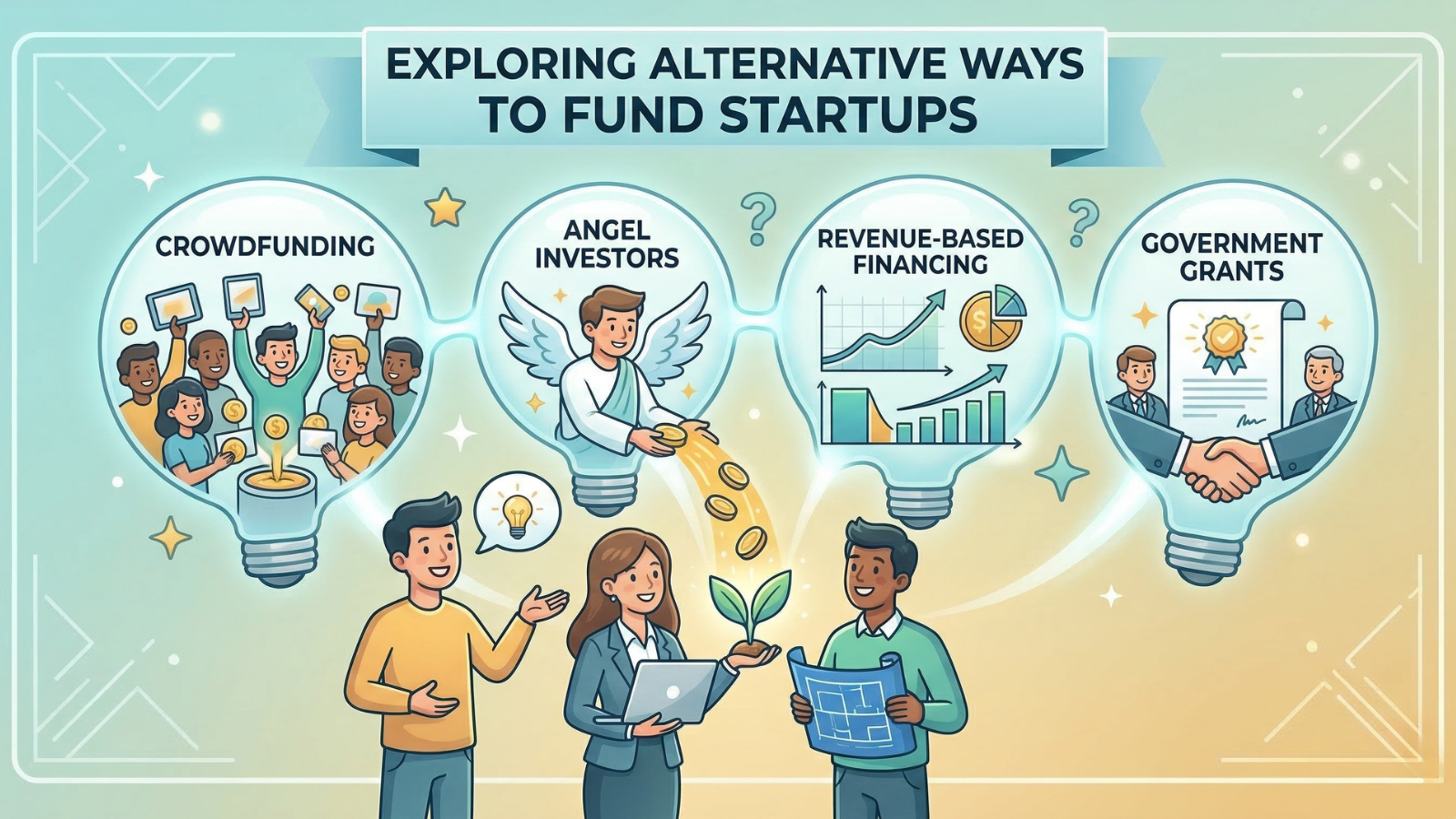
Although traditional venture capital is the most popular for startups, alternative funding options are on the rise. These include crowdfunding, revenue-based funding, grants, incubators, and bootstrapping. Each has its own advantages and disadvantages.
Other sources of capital allow for capital to be provided without giving away equity on a large scale, which is important for the founder if he wants to maintain control. Alternative sources also allow for capital to be provided for startups that do not fit into the traditional VC model.
However, the right way to fund is determined based on the requirements of the startup for growth, financial position, as well as long-term goals. In many cases, it has been found that the best way to fund is to combine two or more funding options to ensure the stability required for the growth of the startup.
Aligning Investors with Your Mission
While funding is not just an issue of money, it is an issue of finding the right investors to support the mission. Investors may not have the same mission as the startup and may cause friction.
Alignment matters because investors who understand and share the startup’s vision are more likely to provide strategic guidance, mentorship, and connections. They become partners rather than simply financial backers.
To identify aligned investors, one has to do some research. Knowing their past investments and communication style can help founders identify investors who can align their interests. Founders should talk to them before the need for capital. It can help them build rapport.
How Investor Syndicates Expand Opportunities
The investor syndicates offer a unique chance for startups to gain access to larger sources of capital. This is where the funds of the investor are pooled together, offering investments that are not possible through other sources of investment.
For startups, syndicates offer not only financial support but also a group of expert resources that can be leveraged. The various investors involved in a syndicate can also offer advice that can be valuable in positioning the startup in the market.
Startups can benefit from syndicates through proper preparation of data, growth strategies, and a shared vision. The syndicate model also offers a collaborative decision-making process, which instills confidence in the startup’s ability to be successful.
Preparing for Investor Due Diligence
Due diligence is the process investors use to validate all information presented by a startup. It typically involves examining financial statements, legal compliance, market potential, and the founding team’s capabilities.
Preparation for due diligence is a sign of professionalism and helps instill trust among investors. Startups that are well-recorded and have provided detailed documentation are more likely to be successful in raising funds.
Dealing with concerns proactively, whether they pertain to operational issues, market risks, or financials, helps instill transparency. This not only helps instill trust among investors, but it also enables the startup to establish its credibility as a well-managed entity.
Building Lasting Relationships with Investors
Fundraising is not a one-time event, rather the establishment of a relationship with the investors is a must for more support.
Founders may build these relationships by regularly communicating with the investors and keeping them informed about the progress of the startup. This will help them feel included in the startup’s journey. This will make them more willing to help the startup.
A strong investor relationship helps turn a transactional funding process into a collaborative one.
Conclusion
To be successful in raising capital, not only is it important that you have a good idea but also that you are aware of how startup investors evaluate startup opportunities, are aware of possible red flags, build trust, and are able to secure good investment partners.
Founders who approach funding strategically, prepare thoroughly, and focus on long-term relationships can not only fund startups effectively but also gain partners who contribute to sustainable growth. From early-stage metrics to syndicate collaborations, every step is an opportunity to strengthen credibility and maximize chances of success.
Through their thoughtful approach to choosing their investors, showing their understanding of the market, and being transparent, founders are able to set their startups up for a successful trajectory with the type of investment they seek.
FAQs
- How do founders show long-term potential to startup investors beyond early traction?
Founders can demonstrate long-term potential by showing a clear roadmap, consistent learning, and an understanding of how the market may evolve. Startup investors value founders who can anticipate shifts rather than rely only on early wins.
- What signals tell investors that a founder truly understands their market?
Investors look for proof through customer conversations, real-world insights, and an ability to explain industry challenges simply. These signals matter more than polished presentations.
- Why do some investors prefer to fund startups led by industry outsiders?
Sometimes an outsider notices gaps insiders overlook. Investors can invest in startups that have unconventional leaders if they have fresh thinking, good research, and are open to learning.
- How can founders build trust when their startup has limited or no financial history?
Through sharing of early learnings, recording of experiments, and demonstrating discipline in planning. Investors of startups are interested in working with entrepreneurs who have shown integrity and thoughtfulness even without substantial revenues generated.
- What makes investor–founder misalignment more damaging than financial risk?
Misalignment can derail decision-making, slow growth, and create tension. Even strong startup investments suffer when founders and investors disagree on mission or timelines.
- How can founders improve their chances with investor syndicates?
Founders can show that they have good data, can communicate effectively, and that they can leverage the collective knowledge to help them achieve their objectives, as shown by syndicates that invest in startups with well-structured data and a collaborative approach.
- Why do investors sometimes decline promising ideas during due diligence?
Due diligence may reveal gaps in execution, unclear ownership structures, or weak market understanding. Even great ideas fail to attract startup investments if the foundation lacks clarity.
- How can founders identify when an investor may not be the right fit?
Pay attention to communication style, expectations, and level of involvement. Startups should not be afraid to walk away from startup investors who are pushing them to make decisions that are not long-term oriented and who are not mission-driven.

I’m the Co-Founder of Startup Steroid, where I help founders navigate the challenges of building a startup. From connecting with the right investors and talent to guiding marketing, legal, and MVP development, I work alongside entrepreneurs to provide practical support and clarity, helping them grow their ideas into successful, sustainable businesses.