Entrepreneurship is not about guesswork but about recognizing risks, reading signs that others might have overlooked, and consistently learning from practical experience. The best venture capitalists are not interested in what sounds cool, but in what has worked long enough to make a difference.
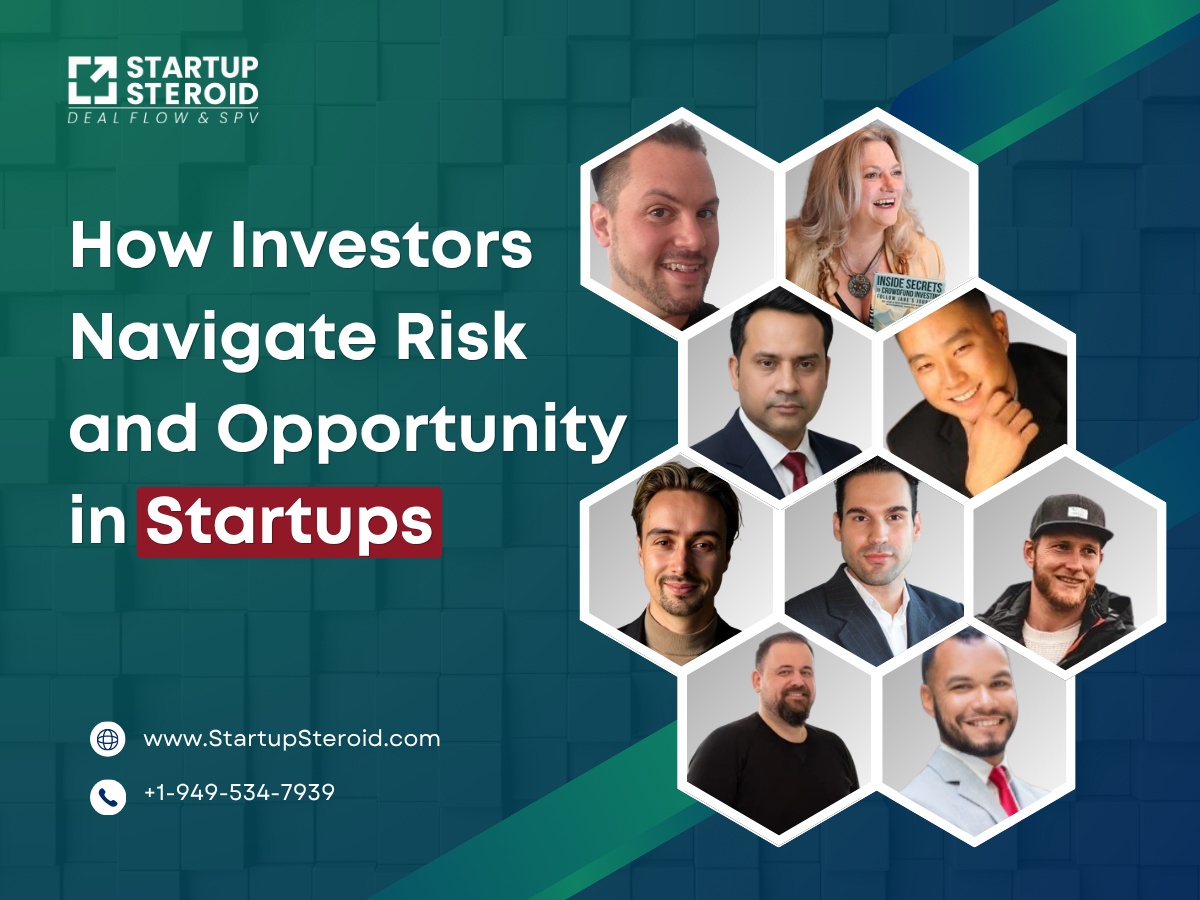
In this article, entrepreneurs and investors with varied backgrounds reveal how they recognize risk, assess opportunities, and know when it’s time to support a startup.
What Risks Do Investors Really Look At?
When evaluating early-stage ventures, every investor has their own checklist, but common themes emerge.
For Zack Moorin, Founder of Zack Buys Houses, one risk looms above all:
“The defensibility of a start-up is much more important than the first level of traction. Without intellectual property or network effects, a small start-up will be destroyed by large companies. Most viral growths are short-lived if there is no significant barrier to entry. Investors should fear the lack of defensibility more so than the size of their market. Even with a great team, if they produce something that can be copied immediately by competition, then the product is doomed.”
He highlights that short-lived viral growth doesn’t matter if competitors can copy you immediately.
Zachary Smith, Founder & CEO of Ready House Buyer, takes a complementary stance:
“Investors need to see how well you have found your product/market fit and also who else is in the space.”
For him, execution risk, especially scalability and financial health, is a top concern.
Understanding Hidden Risks Beyond Traditional Metrics
Some investors dive deeper than spreadsheets.
Kuldeep Kundal, Founder & CEO of CISIN, warns that passion alone isn’t enough:
“The greatest risk of a startup isn’t the competition or market size; it lies with their team’s misguided passion about what they want rather than their users’ true needs and desires. When I assess a startup’s readiness, I’m searching for them to have established an iterative cycle of obtaining feedback from early customers. If they cannot demonstrate how they are learning and adjusting in real time as a result of the feedback, I can virtually guarantee that they will develop something no one ever wants.”
He watches how teams respond to early feedback. If founders can’t show iterative learning, the product might not match what the market actually wants.
Team and Experience Can Reduce Uncertainty
Many investors view the founding team as a strong predictor of resilience.
Geremy Yamamoto, Founder of Eazy House Sale, explains how experience and perseverance matter:
“Whether a start-up has market viability and can scale is what determines its potential for success. When investors look at the founding team they are looking to see how much experience the founding team has in their area of expertise and the ability to persevere in difficult times. One of the biggest indicators that an investor will perceive as high-risk is when a company burns through capital rapidly but does not reach many (if any) of the milestones established by the founders.”
Rapid burn with few milestones? That’s a red flag.
Numbers You Can Explain Without a Deck Matter Most
For Niclas Schlopsna, Managing Partner at spectup, real understanding isn’t about fancy slides, it’s about foundational economics.
“The single biggest risk factor I look at isn’t the product or the market. It’s whether the founder understands their own unit economics well enough to explain them without a deck in front of them. If they can’t walk me through CAC, payback period, and retention off the top of their head, that tells me more than any financial model ever will.”
Startups aren’t judged by potential, they’re judged on how real their economics are today.
His idea of “survivable failure modes” reshapes risk:
“On balancing upside versus downside, I look for what I call “survivable failure modes.” If the worst-case scenario still leaves the company with paying customers and 12 months of runway, that’s a very different risk profile than a company burning through cash on a hypothesis that hasn’t been tested. The fund I scout for wants $3 to 5M ARR, 2x growth, and 130% net dollar retention before writing a check. Those aren’t arbitrary numbers. They’re the thresholds where a company has proven it can grow without breaking.”
Strong investors don’t just aim for big returns, they limit worst-case damage.
Execution Speed and Learning Cycles Trump Bold Vision
Big visions can be inspiring, but they’re not always investable.
Dima Steesy, President of Bravo Zulu Capital Management, favors focus:
“I look for founders who are obsessed with a specific, deceptively simple problem. They aren’t trying to change the world yet — they’re just building something a small number of people intensely want.”
Rather than chasing massive markets early, finding intense use in a small niche is often more promising. It’s easier to scale a solution people love than to invent something everyone might someday need.
Real Proof Comes from Customers, Not Predictions
For many investors, customer behavior is a signal that stands above all.
Jamie Corby, CEO at Corby & Associates LLC, pays attention to real user response:
“The best signal is when the market is pulling the product out of the founders’ hands: customers paying early, expanding usage on their own, or talking in terms of ROI, not features. I also listen to the founders. A good tech founder knows where the system breaks; a good business founder knows why the customer needs to buy now.”
Cool tech or buzzwords aren’t enough; it must create measurable value today.
Her biggest concerns include friction:
“Brilliant tech is worthless if it’s a huge pain for customers to adopt. It must fit into their existing workflow and deliver a clear win. Selling an AI tool to a power plant isn’t like a consumer app; I’m focused on install difficulty, legal risks, and sales cycles. A nine-month setup is a red flag … it just burns cash.”
How Do Investors Balance Upside vs. Downside Risk?
Managing systemic risk is often what separates experienced investors from reactive ones.
Zack Moorin captures the strategy succinctly:
“Investors assess how large an upside could be compared to a downside in order to find asymmetric investments. Asymmetric investments have returns that are much larger than their risks. By using diversification and by limiting exposure with each investment (position sizing) investors can make sure one investment failing does not cause all of their money to fail while allowing winning investments to grow quickly.”
His approach involves diversification and limiting exposure, so one loss doesn’t sink an entire portfolio.
Zachary Smith also stresses discipline:
“The investor can also utilize a staged investment strategy which allows the investor to release funds into the company only when the company achieves its milestone(s).”
This ensures that each capital release is backed by real progress, not hope.
Narratives and Worst-Case Scenarios Shape Better Decisions
Not all risk analysis is quantitative, some of it is storytelling.
Christopher Pappas, Founder of eLearning Industry Inc, uses dual scenarios:
“I balance both the best and worst-case scenarios by creating two narratives. One outlines the most realistic path to scale, while the other focuses on the most likely failure path. If the downside story can be fixed over time and with iteration, I can accept it. However, if it relies on luck or a market shift, I would pass on it. We constantly observe what gains attention and what fades away.”
If the downside can be corrected through iteration, he is willing to invest. If it relies on luck or external forces, he won’t.
This approach favors businesses that learn fast and adapt even faster.
Where Cognitive Bias Creates the Biggest Risk
Investors sometimes are their own worst enemies.
Karen Rands, Compassionate Capitalist in Chief at Kugarand Capital, reflects on what she’s learned from watching others:
“Years ago, when I was helping rebuild the Network of Business Angels & Investors in Atlanta, I asked every investor the same question: What deal do you regret—and why?
Every single one had an answer. And almost all of them said some version of:
“I should have known better.”
That’s the pattern. It’s not lack of intelligence—it’s lack of objectivity. Investors get caught up in a founder’s charisma or jump in because everyone else is in. Angel investors and VCs are not immune to FOMO.”
Charisma, hype, and the fear of missing out can make even intelligent investors overlook fundamental flaws.
According to her, being disciplined, and sometimes contrarian, is what prevents poor outcomes:
“If they can’t clearly explain who buys, why they buy, what it costs to acquire them, and how that scales — it’s not a plan. It’s a hope.”
What Signals Tell Investors a Startup Is Worth the Risk?
Across industries and investing styles, a few signals show up again and again:
- Rapid, real customer traction
Customers who pay, stay, and expand usage; this is the most persuasive early evidence. - Team competence and resilience
Founders who explain their learnings and react to feedback; often do better. - Clear economics and scalability
If revenue mechanics are understood intimately, the startup feels less risky. - Demonstrated ability to adapt
Teams that change course based on feedback avoid wasting time and capital.
As Niclas says, founders who have been told “no” multiple times but can explain what they learned signal pattern recognition; a core survival skill in startups.
Conclusion
There’s no single formula that guarantees a startup will succeed, but seasoned investors tend to follow a similar mindset. Their approach centers on controlling risk exposure by exercising discipline from the get-go. They pay close attention to customer psychology rather than trying to dazzle potential customers with their marketing strategies or forecasting future success. The venture capitalists seek entrepreneurs who have a comprehensive understanding of their product, not just its promise but also the technology that will deliver on that promise. Most importantly, they need entrepreneurs who can adapt quickly and respond to feedback.
In the end, investing in startups is a balance of insight and practicality. The strongest investors reduce uncertainty by grounding their decisions in evidence, adaptability, and a clear understanding of what drives long-term value.

I’m the Co-Founder of Startup Steroid, where I help founders navigate the challenges of building a startup. From connecting with the right investors and talent to guiding marketing, legal, and MVP development, I work alongside entrepreneurs to provide practical support and clarity, helping them grow their ideas into successful, sustainable businesses.