Developing an innovation is just one element of building a successful startup. The next stage, which troubles many entrepreneurs, involves gathering sufficient funding to transform their ideas into viable businesses. It doesn’t matter whether the startup is planning on raising funds for a pre-seed or a seed round; in either case, investors need assurance that the entrepreneur knows their market and business well.
This is where artificial intelligence is changing the way founders prepare for fundraising. It is no longer limited to large corporations with significant budgets. Today, startups of every size can use AI-powered tools to improve research, organize information, understand customers, create financial models, and manage fundraising activities more efficiently.
However, it must be understood that AI is not meant to replace good management and the basics of business operations. Venture capitalists still look at the person running the company, the product being offered, and the potential market; rather than the technology alone.
This guide explains everything founders need to know about using AI to support early-stage startup funding. It covers how AI can help before, during, and after fundraising while also highlighting its limitations and best practices.
What Is Early-Stage Startup Funding?
Before understanding how AI fits into fundraising, it is important to understand what early-stage startup funding actually means.
The financing at this level includes pre-seed, seed, and maybe even series A level financing. At this level, the business has not yet demonstrated that its offerings solve any customer problems and become scalable ventures.
Unlike mature companies, early-stage startups often have limited financial history. Consequently, the areas of focus become market opportunity, customer validation, product development, founding team experience, competitive advantage, and scalability.
However, raising funds for an early-stage venture is not merely creating a pitch deck. There is need for doing market research, validating assumptions, collecting financial information, compiling legal documents, having traction, and communicating the idea clearly.
AI helps simplify many of these responsibilities without replacing the founder’s decision-making process.
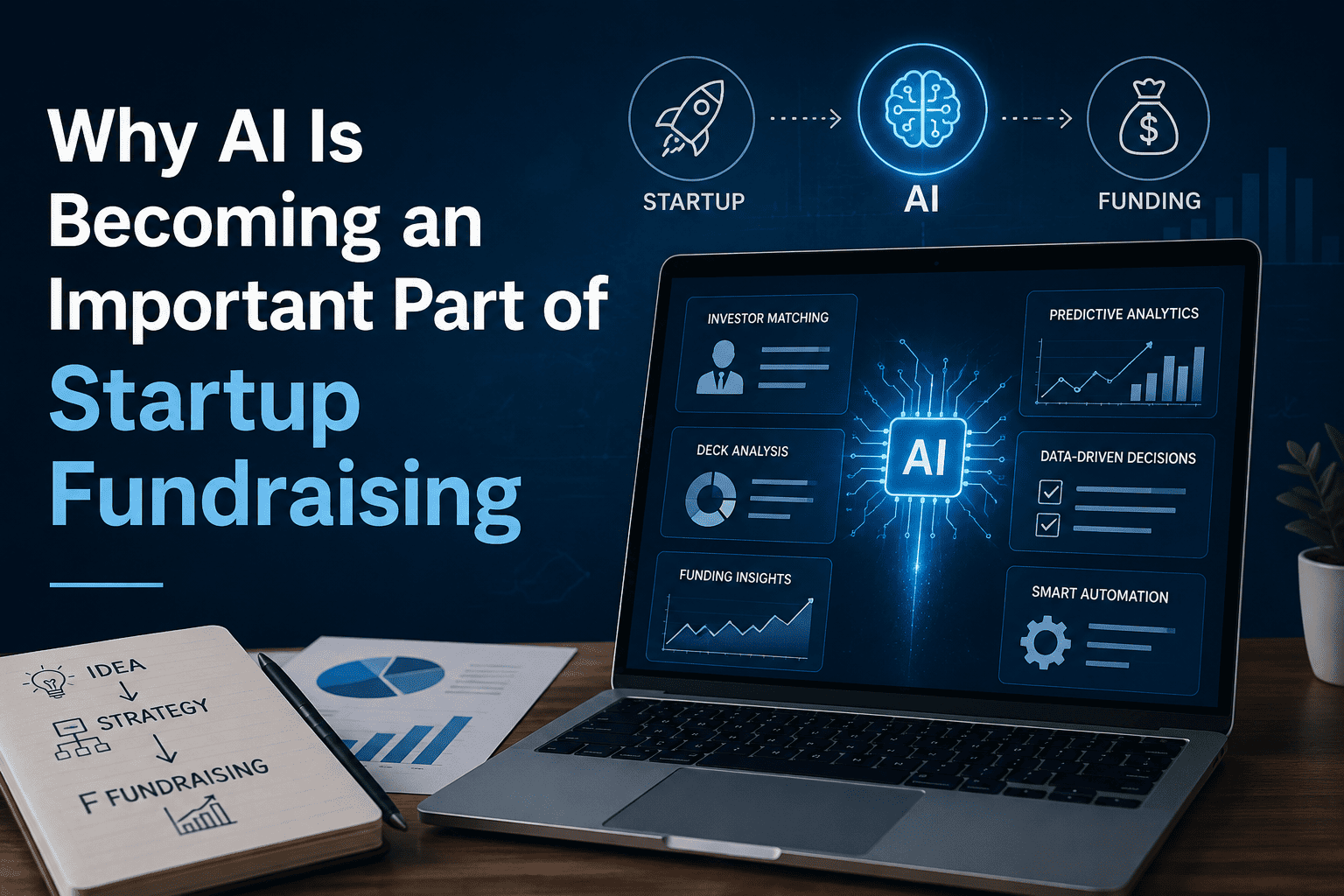
Why AI Is Becoming an Important Part of Startup Fundraising
Fundraising is time-consuming, consistent, and detailed. In addition to fundraising, the founders will also have to be engaged in developing products, providing customer service, recruiting people, marketing, and operations.
Managing all of these responsibilities manually can quickly become overwhelming.
AI reduces the amount of time required for repetitive tasks such as organizing information, summarizing research, reviewing documents, and identifying trends. Rather than wasting multiple days collecting data, many of these tasks can be completed much more quickly, allowing entrepreneurs to focus more on acquiring customers.
Given the rising competition when it comes to startup investment, many startups that work efficiently have an edge over other companies.
How AI Supports the Startup Funding Journey
AI is useful throughout the fundraising lifecycle rather than at just one stage.
It assists with researching markets, identifying competitors, analyzing customer feedback, preparing financial forecasts, organizing investor communications, reviewing documents, and managing due diligence.
All these are helpful in making the fundraising process more efficient since investors like founders who come to them prepared with all the facts.
Rather than making decisions independently, AI supports founders by organizing large amounts of information into useful insights.
Using AI to Conduct Better Market Research
One of the first questions investors ask is whether founders truly understand the market they are entering.
This would only be possible through extensive research on customer behavior, industry trends, market size, competitor activities, and potential opportunities.
Earlier, the task of compiling the reports and going through articles to understand industry trends would take founders several weeks. With the use of artificial intelligence, this burden becomes much easier.
Instead of spending valuable time searching for information manually, founders can focus on understanding the implications of that research.
Good market research will boost the investors’ confidence when talking about investing in the startups due to their preparedness and strategic thinking.
Understanding Customers More Clearly
Customer understanding is one of the strongest indicators of startup readiness.
Investors need to see proof that the founders have talked to customers and known what issues they face.
AI helps founders organize interview notes, categorize recurring themes, summarize customer feedback, and identify common pain points.
This will help founders to understand what product features need to be improved first and show that product development is driven by customers’ needs and not assumptions.
However, founders should continue speaking directly with customers because genuine conversations provide context that software cannot fully capture.
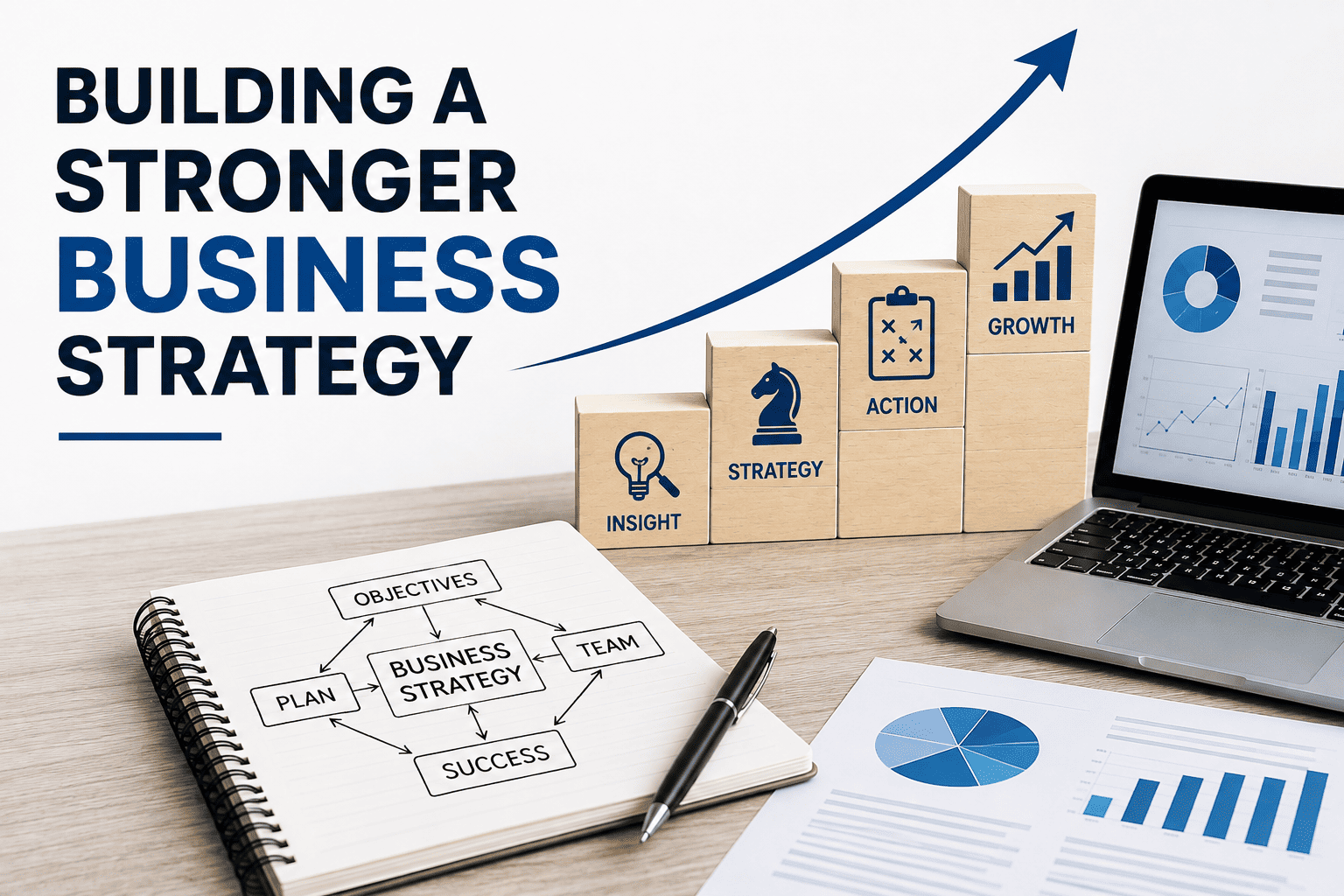
Building a Stronger Business Strategy
A startup’s strategy influences every investor decision.
Artificial intelligence is helpful in analyzing various business models, comparing pricing models, evaluating market potential, and even recognizing possible business operation problems.
Another task that artificial intelligence can help with is in organizing documents for strategic planning to better express the founder’s ideas.
Nevertheless, the final strategy should always be tailored to the unique characteristics of the company and its vision.
Software is not a substitute for leadership in decision-making.
Writing Better Business Plans
Business plans remain valuable because they demonstrate how a startup intends to achieve sustainable growth.
The challenge faced by many entrepreneurs is the proper structuring and inclusion of all necessary points in these plans.
This is where AI helps by organizing information in a logical manner, making it easier to read, detecting missing parts, and improving the way the information is presented in general.
Nevertheless, even with such help, each business plan needs to be checked and customized. Investors can immediately detect the generic content in it, which is not based on any business.
A customized business plan remains an important asset when pursuing early-stage startup funding.
Creating More Reliable Financial Projections
Financial forecasting often feels intimidating for first-time founders.
Estimates of revenue, operational cost structure, staffing needs, customer acquisition cost, and cash runway are all things that need proper contemplation.
Artificial Intelligence helps the founders with financial projections and analysis of various scenarios.
The founders can, for instance, analyze the impact of conservative, moderate, and aggressive business scenarios on future funding needs.
Financial planning done accurately provides investors more certainty regarding the knowledge of the entrepreneurs about the economic structure of the business.
Developing Stronger Pitch Decks
The pitch deck is one of the most crucial fundraising documents.
It tells investors about the problems faced by the business, its solution, target market, business model, competitive advantage, traction, financial projection, and fundraising requirements.
AI assists entrepreneurs in structuring the slides, using simpler language, being consistent, and adding content where needed.
The authentic nature of the venture should be maintained all through the process.
Venture capitalists like founders who demonstrate their genuine excitement about the business.
Identifying the Right Investors
Not every investor is interested in every startup.
While some investors specialize in healthcare technologies, others invest in financial technologies, software for enterprises, consumer goods, or sustainability.
Using AI, the founders can manage the investor database, analyze past investments, and locate firms that work in their industries and funding phases.
Such an approach saves time and increases chances for productive discussions when raising funds for a startup at its early stages.
Improving Investor Outreach
Cold emails remain an important part of fundraising.
Unfortunately, investors receive hundreds of fundraising requests every month.
AI enables founders to personalize their outreach by structuring data on investors, finding appropriate connections, and enhancing communication effectiveness.
Personalizing their outreach makes the founders appear professional and prepared.
But then again, the founders need to ensure that their messages reflect genuine interest in the portfolios of the investors.
Preparing for Investor Meetings
Investor meetings often determine whether fundraising discussions move forward.
These include knowledge of the investors’ background, questions that will be asked by investors, analysis of financial indicators, and preparation of supporting documents.
The use of AI allows entrepreneurs to prepare for meetings more efficiently by summarizing relevant information for them.
This will leave founders enough time to rehearse their presentations.
Organizing Due Diligence Efficiently
After investors show their intent to invest, they start evaluating the company’s details.
The due diligence process usually includes incorporation papers, cap sheets, financial statements, contracts, customer data, compliance data, intellectual property data, and operations reports.
The use of AI would make it easy to classify these documents in data rooms.
A properly conducted due diligence process saves time and proves operational readiness.
Managing Fundraising Activities
Fundraising involves dozens of conversations happening simultaneously.
The founders need to keep track of the meetings, follow-ups, feedback, requests for paperwork, and things to do in the future.
The CRM that uses AI can help in making this possible without missing any potential opportunity.
It becomes particularly useful as the fundraising efforts intensify.
Using AI to Analyze Competitors
Investors expect founders to understand their competitive landscape thoroughly.
AI helps to gather publicly available information about competitors, price strategy, product updates, and market positioning.
Rather than copying their competitors, entrepreneurs could look into ways where their venture is unique.
A comprehensive competitive analysis helps to create more meaningful conversations about early-stage startup financing due to its strategic significance.
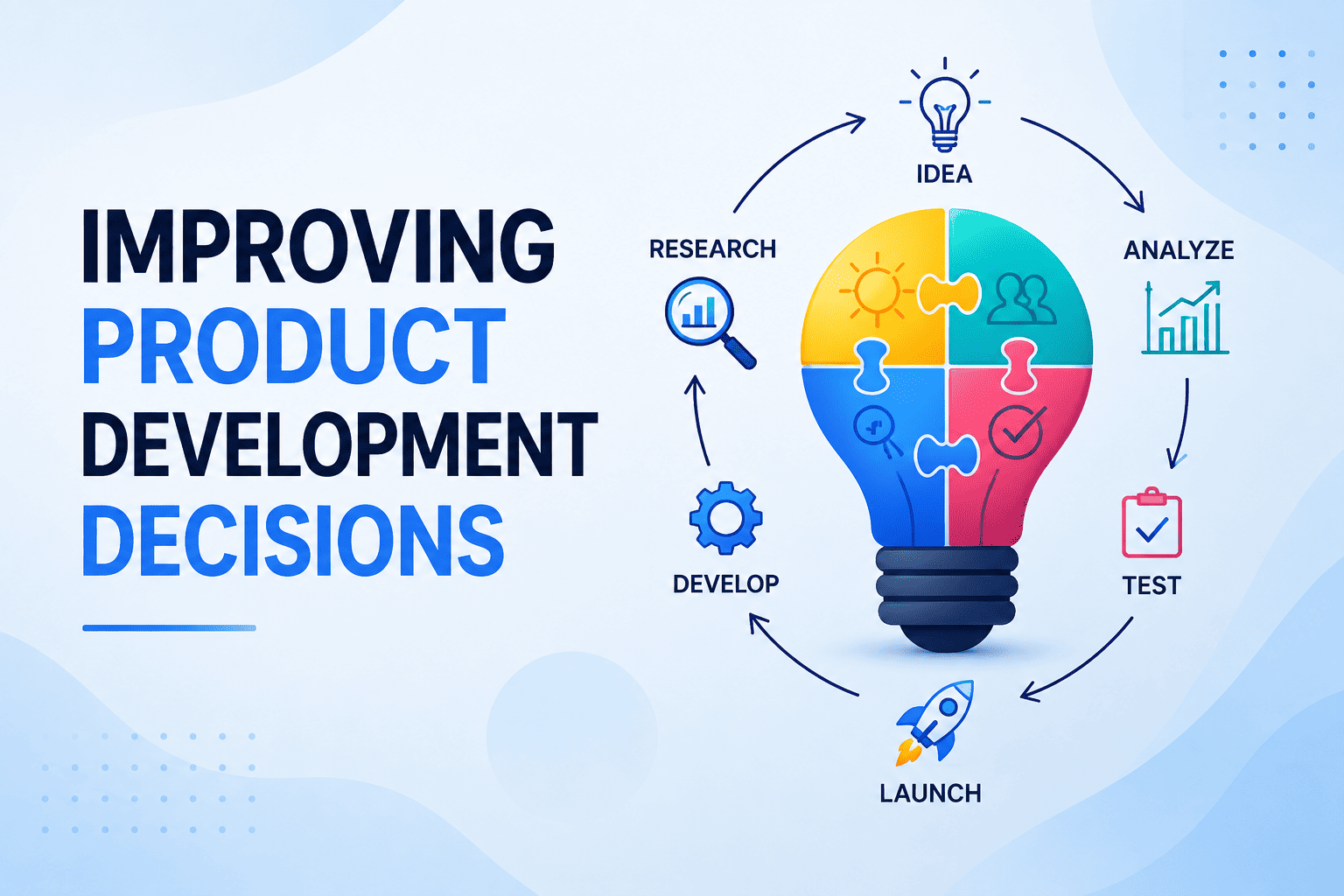
Improving Product Development Decisions
Effective fundraising is largely based on creating products that people desire.
With the help of AI, startups get to understand their customers’ behavior, their needs, their level of engagement, and how they use the products.
Such insights help startups make better product decisions which create value for their customers.
When product decisions align with customer demand, fundraising conversations become much stronger.
Supporting Smarter Marketing Decisions
Customer acquisition is an important indicator of startup growth.
With the help of AI, startup founders will be able to measure the success of their campaigns, get insight into their target audience’s behavior, discover good marketing channels, and assess the trends of conversions.
Instead of relying solely on intuition, startups can make more informed marketing decisions using organized performance data.
Better customer acquisition usually results in better fundraising performance.
Saving Time Through Operational Efficiency
One of AI’s greatest advantages is improving operational efficiency.
Entrepreneurs waste an enormous amount of time dealing with paperwork, scheduling, note-taking, reporting, and performing other administrative tasks.
AI helps to automate all these chores, leaving more time to engage customers, develop products, and raise funds.
It helps particularly when it comes to startups that operate on limited resources.
Common Mistakes Founders Should Avoid
Although AI offers many benefits, relying on it without proper oversight can create new problems.
Founders make financial projections based on assumptions that may not be verified.
The founders usually have generic knowledge that cannot help them realize their unique selling propositions.
There are some founders who are too much into technology but hardly talk to customers.
Investors quickly recognize businesses that lack authentic market understanding.
AI should support careful preparation rather than replace thoughtful execution.
Where Human Expertise Remains Essential
Although technology keeps advancing annually, fundraising is still very human-oriented.
The way how founders communicate, their integrity, persistence, leadership skills, adaptability, problem-solving abilities, etc. are being evaluated by investors.
These qualities cannot be generated through software.
Judgment and experience are needed when it comes to establishing trust, addressing challenging queries, negotiations around investment terms, and managing the expansion of their startup.
The strongest founders combine technology with practical business leadership.
Best Practices for Using AI Responsibly
Firstly, the founders should recognize repetitive tasks that take away a lot of precious time.
AI works best when organizing information, supporting research, improving documentation, and simplifying administrative work.
Every important output should be reviewed carefully before sharing it with investors.
Market models, market research, customer insights, and business planning should be validated through credible sources.
The use of technological tools is very useful if they improve the knowledge of the founder.
Measuring Success Throughout the Fundraising Process
Using AI is only beneficial if it improves measurable outcomes.
Founders should constantly assess their ability to process fundraising documentation, react to the needs of investors, conduct due diligence, and provide financial data.
They should also pay attention to their customers’ growth rate, revenues, product usage, and investor meeting quality.
By doing this, the founders can learn about areas where they need improvement before raising future funds.
The Future of AI in Startup Fundraising
AI will continue reshaping how startups prepare for investment.
Research will be faster, the models of prediction will become more complicated, customer analysis will be better, and processes of fundraising will become more organized.
Despite these technological advances, investor expectations will remain remarkably consistent.
Investors will still look for good founders, validated products, expanding markets, happy customers, effective implementation, and sustainable business models.
Technology simply helps founders present those strengths more effectively.
Conclusion
Securing investment requires far more than an innovative idea. Founders need to show their understanding of the market, validation from customers, financial prudence, operational preparedness, and future growth potential. It is quite difficult for a startup to fulfill all these criteria while juggling other duties, which is where AI comes into play.
By way of market research, collecting customer feedback, making financial forecasts, helping to improve communication with investors, and conducting due diligence, AI makes the work of a founder easier and more efficient. All these benefits make it possible for a startup to save time on routine activities and concentrate on product development and customer service.
At the same time, founders should remember that technology does not replace strategic thinking, leadership, or execution. Investors still prefer those firms that have a competent team, customer demand, traction, and sustainable business models. It is important to note that AI performs well when used to supplement these fundamentals instead of replacing them.
With more competition in fundraising for startups at the initial stages, firms that adopt technologies wisely along with sound business strategies can do well in raising funds and achieving success in the future.
FAQs
• Can poor data organization reduce the chances of early stage startup funding?
Yes, that is right because investors want the founders to give financial details, legal paperwork, customer feedback, and other business details. Having all the information organized will earn the confidence of investors, while having it disorganized will not.
• How can founders use AI without making their startup appear generic to investors?
The use of AI must be limited to organizing research findings and uncovering insights and not creating stock market stories. The investment community seeks the true picture of the markets, unique positioning and founder-driven decisions, which cannot be automated.
• Why do investors care more about customer validation than polished presentations?
While the beauty of a pitch deck can certainly draw the eye of an investor, proof from customers reveals that there is someone who actually wants to purchase your product. The decision of investors is generally more influenced by demand from customers than aesthetics.
• Is AI useful for startups that are still preparing for early stage startup funding?
Indeed. Before even starting to talk to investors, AI can be useful for the founders to analyze the market trends, arrange their customer feedback, make financial projections, find out about their competitors, and create business documents.
• How does competitive analysis influence early stage startup funding decisions?
It is important for investors to know if there is any competitive edge that exists for the company. This requires analyzing the competitor companies properly so that the entrepreneurs can showcase the competitive edge of their product in the market.
• Can AI improve investor relationships after fundraising begins?
Yes. AI-based CRM software can help entrepreneurs in handling all their interactions with investors, schedule follow-ups, take minutes of meetings, and keep tabs on all conversations.
• What fundraising activities should founders never delegate entirely to AI?
The founders themselves will have to deal with everything concerning strategy, fundraising, clients, and relation management. Even though artificial intelligence might help in planning and structuring the process, credibility lies in personal communication.
• How can startups measure whether AI is actually improving their early-stage startup funding efforts?
Instead of emphasizing the technology itself, the founders should pay attention to tangible results in the form of faster preparation of documents, increased response rate, reduced time of due diligence, improved financial planning, and better investor meetings.

I’m the Co-Founder of Startup Steroid, where I help founders navigate the challenges of building a startup. From connecting with the right investors and talent to guiding marketing, legal, and MVP development, I work alongside entrepreneurs to provide practical support and clarity, helping them grow their ideas into successful, sustainable businesses.